
Google Ads Verification News: Latest Policy Changes Advertisers Must Track
Google Ads advertiser verification has changed several times in the past year, and advertisers who ignore these updates risk account suspension. The most recent Google…

Google Ads helps businesses reach customers on Search and YouTube by placing paid ads in front of people who are already searching for related products or watching relevant video content. The platform connects advertisers to two large audiences: people typing queries into Google Search and people watching videos on YouTube. Businesses choose their audience, set a budget, and let Google's auction system decide which ads get shown, when, and to whom.
To understand how this works, look first at what Google Ads is and how the platform operates. From there, the focus shifts to how businesses use Search campaigns to catch people at the moment they look for a solution.
Beyond Search, YouTube gives businesses a second channel to reach people through video instead of text. The two channels work differently, so knowing when to use each one matters. This article then walks through the different campaign types available and what it takes to launch a first campaign.
As an expert at GDT Agency with years of experience working with Google Ads, Google ad account, especially Google agency ad account, I can tell that Google Ads is an advertising platform owned by Google that lets businesses pay to show ads across Search, YouTube, Display, and other Google properties. It runs on a pay-per-click or pay-per-impression model, so businesses pay only when someone interacts with their ad.
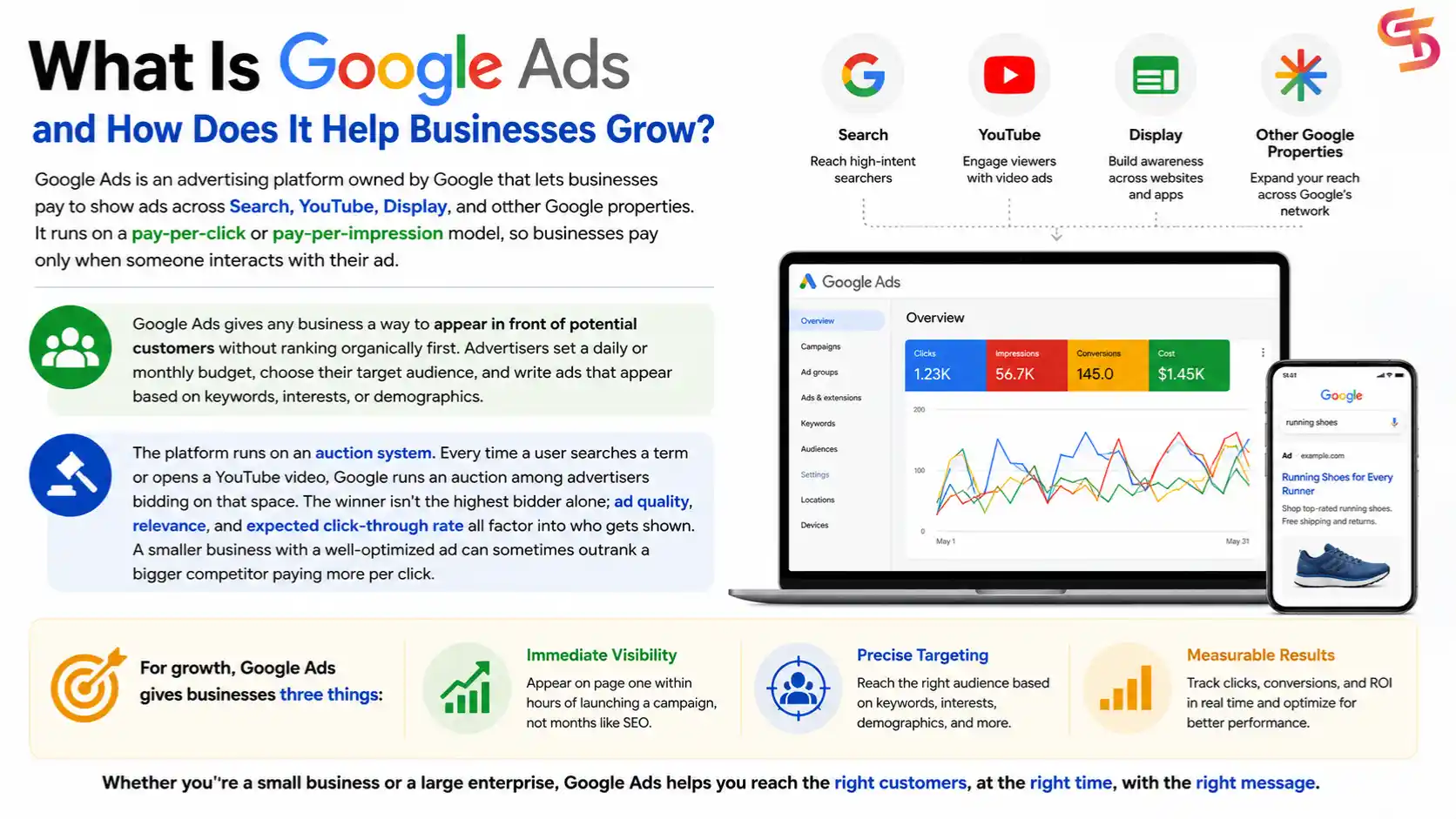
Google Ads gives any business a way to appear in front of potential customers without ranking organically first. Advertisers can set a daily or monthly budget, choose target audiences, create campaigns, and track performance from one dashboard.
The platform runs on an auction system. Every time a user searches a term or opens a YouTube video, Google runs an auction among advertisers bidding on that space. The winner isn't the highest bidder alone; ad quality, relevance, and expected click-through rate all factor into who gets shown. A smaller business with a well-optimized ad can sometimes outrank a bigger competitor paying more per click.
For growth, Google Ads gives businesses three things: immediate visibility, precise targeting, and measurable results. A new business with no organic search presence can appear on page one within hours of launching a campaign, something that takes months through SEO alone.
Google Ads helps businesses reach customers on Search by showing text ads at the top of Google's results page when someone types a related keyword. These ads look similar to organic listings but carry a small "Sponsored" label.

Search ads work because they target intent directly. Someone searching "best running shoes for flat feet" is close to making a purchase decision, and a well-placed ad puts a business in front of that person at the right moment. Below is a closer look at how these ads appear and what controls advertisers have over targeting.
Search ads appear above or below the organic results on a Google search page, marked with a small "Sponsored" tag. They trigger when a user's search query matches keywords the advertiser bid on.
Search campaigns rely on keyword match types to control how closely a search query needs to match the advertiser's chosen keywords before the ad triggers.
Research from WordStream's 2024 advertising benchmark report found that the average click-through rate for Google Search ads across industries sits around 6.4%, higher than the average for Display ads.
Google Ads helps businesses reach customers on YouTube by running video ads before, during, or alongside content people are already watching. This gives businesses a way to reach audiences who aren't actively searching but fit a specific demographic or interest profile.
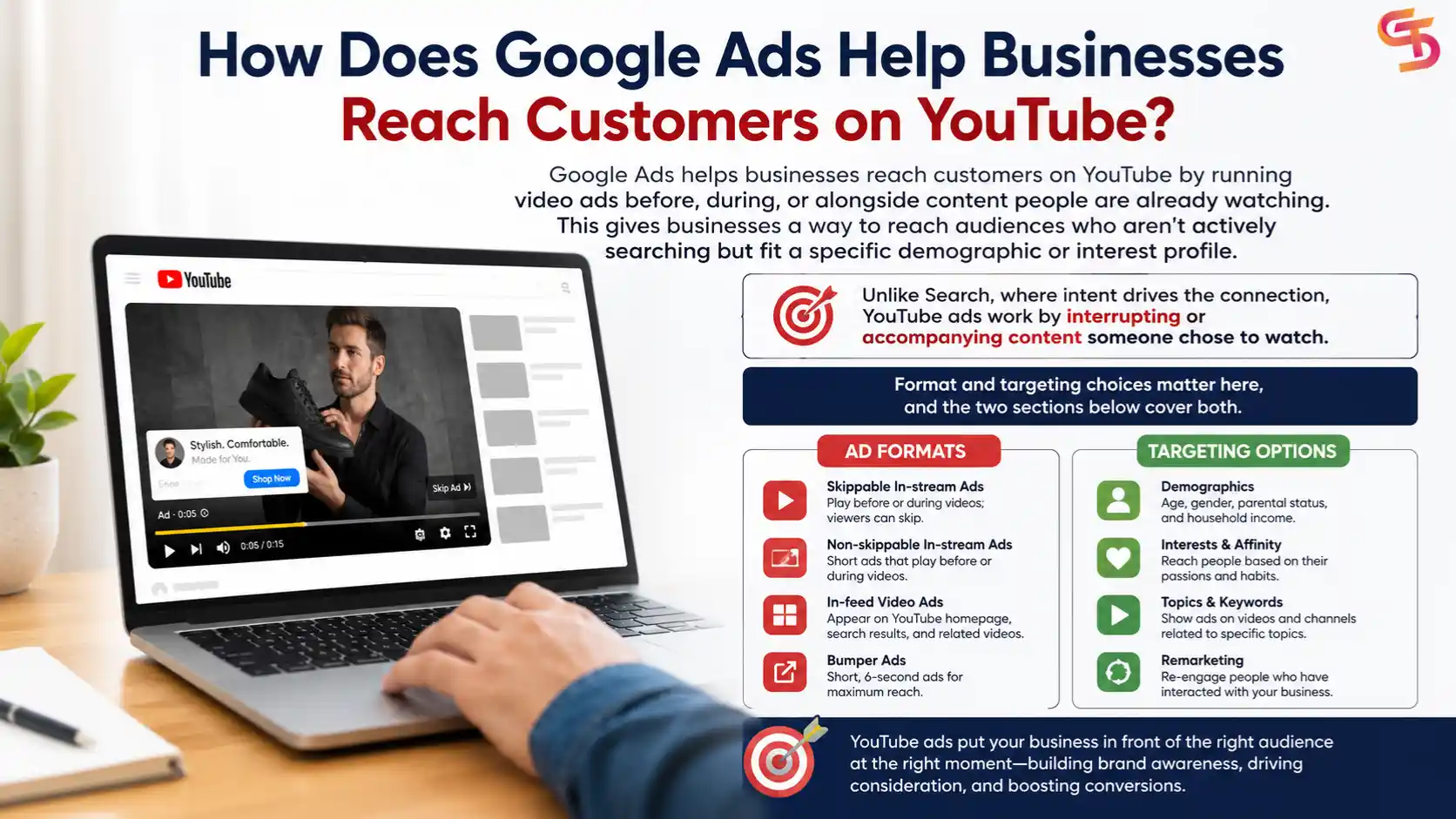
Unlike Search, where intent drives the connection, YouTube ads work by interrupting or accompanying content someone chose to watch. Format and targeting choices matter here, and the two sections below cover both.
YouTube offers several video ad formats, each suited to a different goal and budget.
Businesses target YouTube audiences through demographic data, interests, and viewing behavior rather than keyword searches alone.
Google Ads on Search and YouTube differ mainly in format and user intent. Search wins at capturing people actively looking for a solution, while YouTube wins at building brand recognition among people who aren't searching yet.
Search works on a pull model and meets demand that already exists. YouTube works on a push model and creates demand or awareness where none existed. Both channels serve a purpose, and the right choice depends on the business goal.
Search performs better for generating immediate leads because it targets people already searching with clear purchase or research intent.
A user typing "emergency plumber near me" is ready to act, and a Search ad puts a business directly in their path. This makes Search a strong fit for businesses that need quick conversions, like local services or e-commerce stores running promotions.
YouTube performs better for building brand awareness because video content allows storytelling and emotional connection that text ads can't easily match.
A business launching a new product or entering a new market often benefits more from YouTube's reach and visual format, even when the immediate return on ad spend runs lower than Search. Over time, that awareness feeds back into Search performance, since people who saw a brand on YouTube tend to search for it directly later.
Google Ads offers five main campaign types: Search, Video, Display, Shopping, and Performance Max, each built around a different placement or goal.

Google's own Ads Help documentation notes that businesses running Performance Max alongside existing Search campaigns report incremental conversions Search alone doesn't capture, largely because Performance Max pulls in traffic from Display, Discover, and Gmail placements at the same time.
A business starts its first Google Ads campaign by setting a clear goal, choosing a campaign type, defining a budget, and writing ads that speak to the target audience. Most campaigns go live within a day.
The setup process stays simple, but the details around budget and timing determine how fast a business sees a return.
Google Ads sets no fixed minimum budget for a campaign, but most small businesses start with $10 to $50 per day to gather enough data for meaningful optimization.
Bidding strategy matters as much as total budget. A business can choose manual bidding for tighter control early on, or switch to automated strategies like Target CPA once it collects enough conversion data.
Most Google Ads campaigns need one to two weeks to exit the learning phase, during which Google's algorithm gathers performance data and adjusts delivery.
Performance can look inconsistent during this period, with costs sometimes running higher than expected. Businesses that avoid major changes during the learning phase, like adjusting bids or pausing ads too early, tend to see more stable, predictable performance once the campaign settles.
Google Ads gives businesses two strong paths to customers: Search for people actively looking for a solution, and YouTube for people who aren't searching yet but fit the right profile. Search converts fast because it meets existing demand, while YouTube builds the awareness that feeds future searches. Most businesses get the best results by using both channels together rather than picking one over the other.
A business that wants quick leads should start with Search and refine keywords and targeting over time. A business that wants to build a brand or enter a new market should lean on YouTube's video formats to tell a story text ads can't. Either way, the learning phase takes patience, and a business that avoids major changes in the first two weeks tends to see steadier performance once the algorithm settles.
Yes, a business can run Search and YouTube campaigns at the same time, and many businesses do exactly this to cover both immediate demand and long-term brand awareness.
Cost per click varies by industry and competition, but WordStream's 2024 data puts the average across industries in the range of $2 to $4 for Search ads, with some competitive industries running higher.
Yes, Google Ads requires a landing page or website to direct traffic to, since ads need somewhere for users to click through to after seeing them.
Google Ads gives a new business faster visibility since ads can appear within hours, while SEO takes months to build organic rankings. Most businesses benefit from running both together rather than choosing one over the other.
Yes, since Google's auction system weighs ad quality and relevance alongside bid amount, a smaller business with a well-optimized ad can outrank a competitor bidding higher per click.

Google Ads advertiser verification has changed several times in the past year, and advertisers who ignore these updates risk account suspension. The most recent Google…
You apply for Google Ads monthly invoicing through the Billing settings in your account, and Google reviews your business credit history before approval. The Google…

Google Ads monthly invoicing lets qualified advertisers run campaigns first and pay for the cost later, based on a line of credit that Google extends…
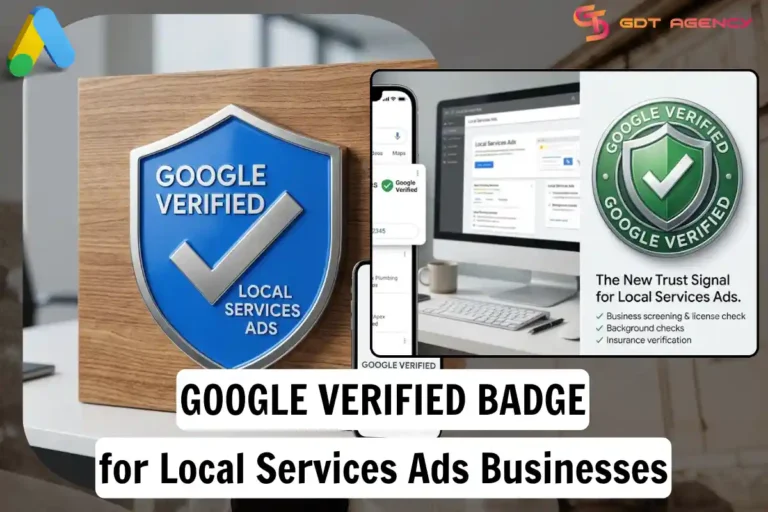
You get verified for Local Services Ads by submitting your business documents to Google, passing a background check, and waiting for Google to review your…

Google Ads advertiser verification requires you to submit specific documents that prove your identity and your business legitimacy. These documents include a government-issued photo ID,…

You can buy verified Google Ads account safely by checking the seller’s business history, confirming payment terms in writing, and testing the account with a…
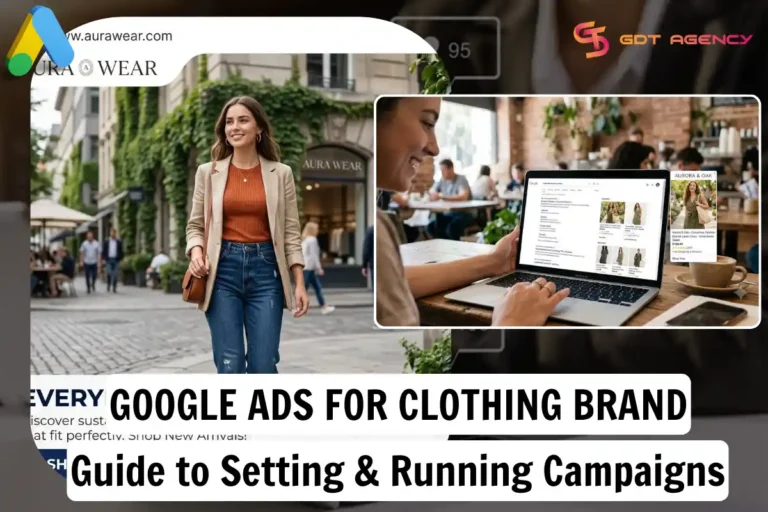
Google Ads works for clothing brands because it puts products in front of people who already search for them. A shopper types “women’s linen dress”…

Google Ads gives weight loss surgery clinics a direct way to reach patients who already search for bariatric procedures, consultation costs, and nearby surgeons. A…
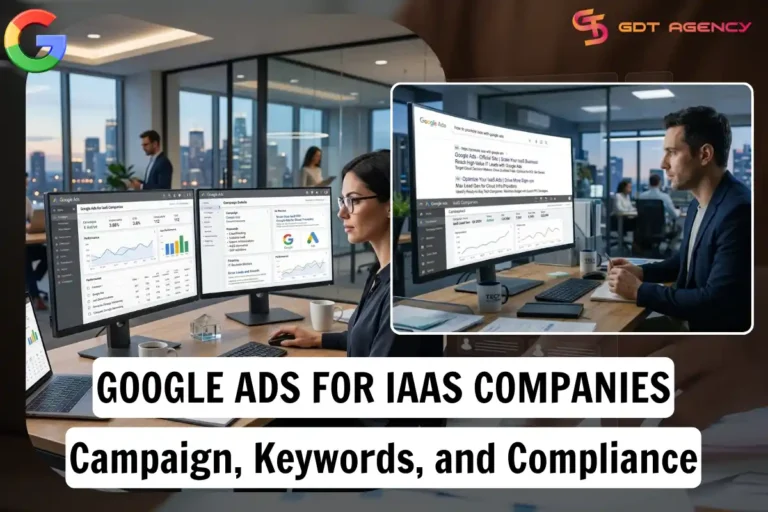
Google Ads works for IaaS companies when the campaign structure matches the technical buying process, not a generic B2B funnel. IaaS buyers research longer, compare…
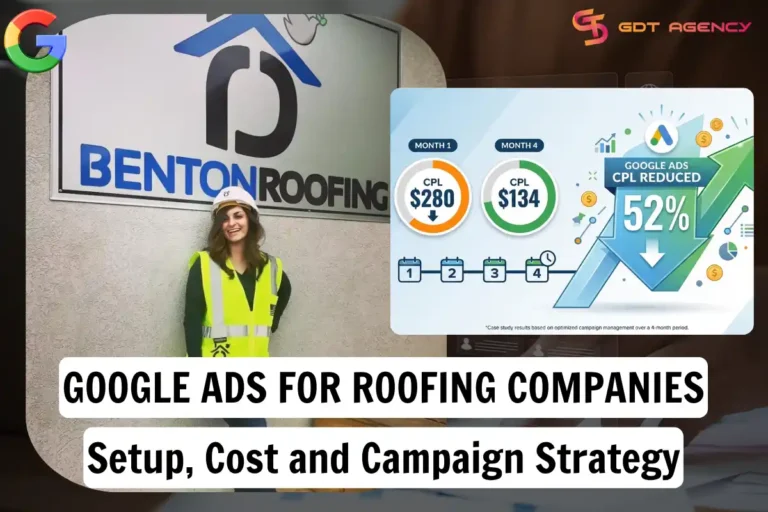
Google Ads works well for roofing companies because it puts your business in front of homeowners at the exact moment they search for a roofer.…