


Instagram Ads vs Facebook Ads 2026: Which Platform Wins for Your Business?


Instagram Ads vs Facebook Ads in 2026 does not have a single winner because the better platform depends on your business type and goals. Instagram Ads usually work better for visual brands, younger audiences, and eCommerce products, while Facebook Ads often perform better for lead generation, local services, B2B, and older demographics. Since Meta now uses stronger AI-based targeting, creative quality and campaign setup matter more than manual targeting. For many businesses, using both platforms together often delivers the best results instead of choosing only one.
Key Takeaways:
- There is no single winner in Instagram Ads vs Facebook Ads in 2026. The better platform depends on your business goals and audience behavior.
- Instagram Ads work best for visual brands, eCommerce, and younger audiences, especially for short-form video and impulse purchases.
- Facebook Ads often perform better for lead generation, B2B, local services, and older demographics where trust and education matter before purchase.
- Creative quality matters more than manual targeting in 2026 because Meta AI now plays a bigger role in campaign optimization.
- Using both platforms together often delivers the best results through Meta’s Advantage+ placements and AI-driven budget allocation.
Instagram Ads vs Facebook Ads: Key Comparison in 2026
Before deciding which platform deserves more of your ad budget, businesses need to understand the real differences between Instagram Ads and Facebook Ads in 2026 because performance often depends on how customers behave, not which platform looks more popular.
Audience Demographics in 2026
As an expert of GDT Agency who has spent more than 5 years working with Meta ads, Facebook agency ad account and Instagram ads, I noticed that many advertisers still repeat the outdated idea that “young people use Instagram and older people use Facebook.”
Reality looks more complicated in 2026. While the platforms are unified under one ad manager, the user behavior remains distinct. Understanding these nuances is critical for your creative strategy.
Facebook: The Community and Intent Hub
Facebook remains the world’s largest social network, but in 2026, it has pivoted heavily toward Groups and Marketplace.
- Audience: Strongest in the 35-65+ age range.
- Behavior: Users on Facebook are more likely to read longer captions and engage with community-driven content.
- Why it wins: It’s the “trust” platform. For complex sales (like SaaS or Agency services), the longer-form nature of Facebook allows for more education before the click.
Instagram: The Visual Discovery Engine
Instagram still dominates among Gen Z and younger Millennials, especially in fashion, beauty, fitness, travel, and lifestyle categories. However, higher-income professionals between 30 and 45 increasingly engage with business content through Reels and creator-led education.
Instagram is no longer just for photos. It is a discovery engine where visual prestige matters most.
- Audience: Dominant in 18 – 44 age range.
- Behavior: Users are in a “discovery” mindset. They expect high-production value (or highly authentic lo-fi video) and are more likely to make impulsive purchases via Instagram Shop integrations.
- Why it wins: If your product is visual (think fashion, home decor, or travel) Instagram’s algorithm is unparalleled at finding people who want your “aesthetic.”
Creative Strategy: Instagram vs Facebook Ad Formats
The “Instagram ads vs Facebook ads” choice is actually a choice between two different creative psychological states.
Instagram: The 1.5-Second Discovery Window
On Instagram, you have approximately 1.5 seconds to stop the thumb. Users are in a “lean-back” discovery mode.
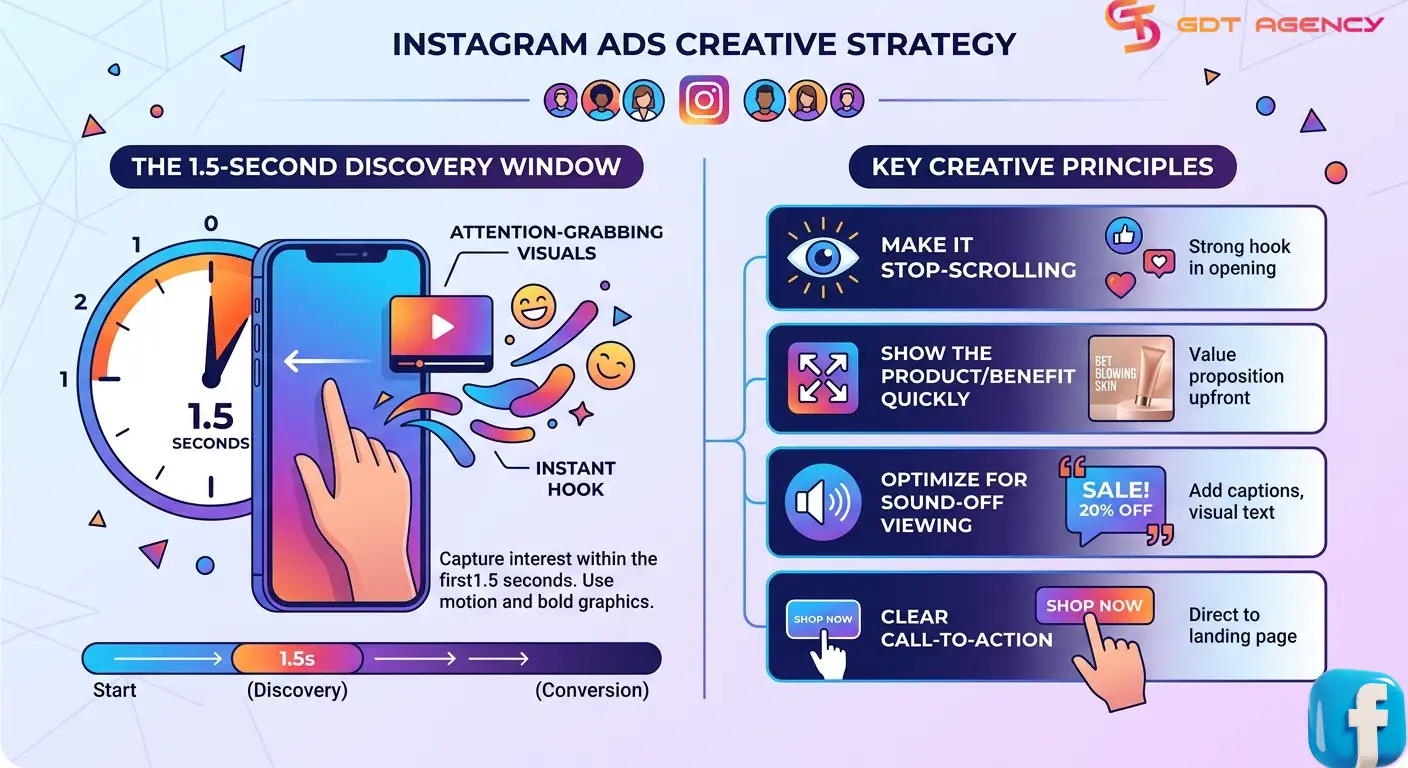
- The “Lofi” Aesthetic: High-gloss, professional ads are often ignored in 2026. The most successful ads look like content from a friend, shot on an iPhone, with native platform fonts and trending music.
- Reels as the Engine: Reels are the primary growth driver on Instagram. Mark Zuckerberg, CEO of Meta, has confirmed that on Instagram, Reels and video continue to drive engagement, with Reels alone now making up 50% of the time that’s spent within the app. Our experts believe that 60% of all conversions on the platform will happen via the Reels tab in 2026. Therefore, your ad must feel like an entertaining 15-30 second short-form video, not a sales pitch.
Facebook: The High-Intent “Read-More” Layout
Facebook users are more comfortable with information density.
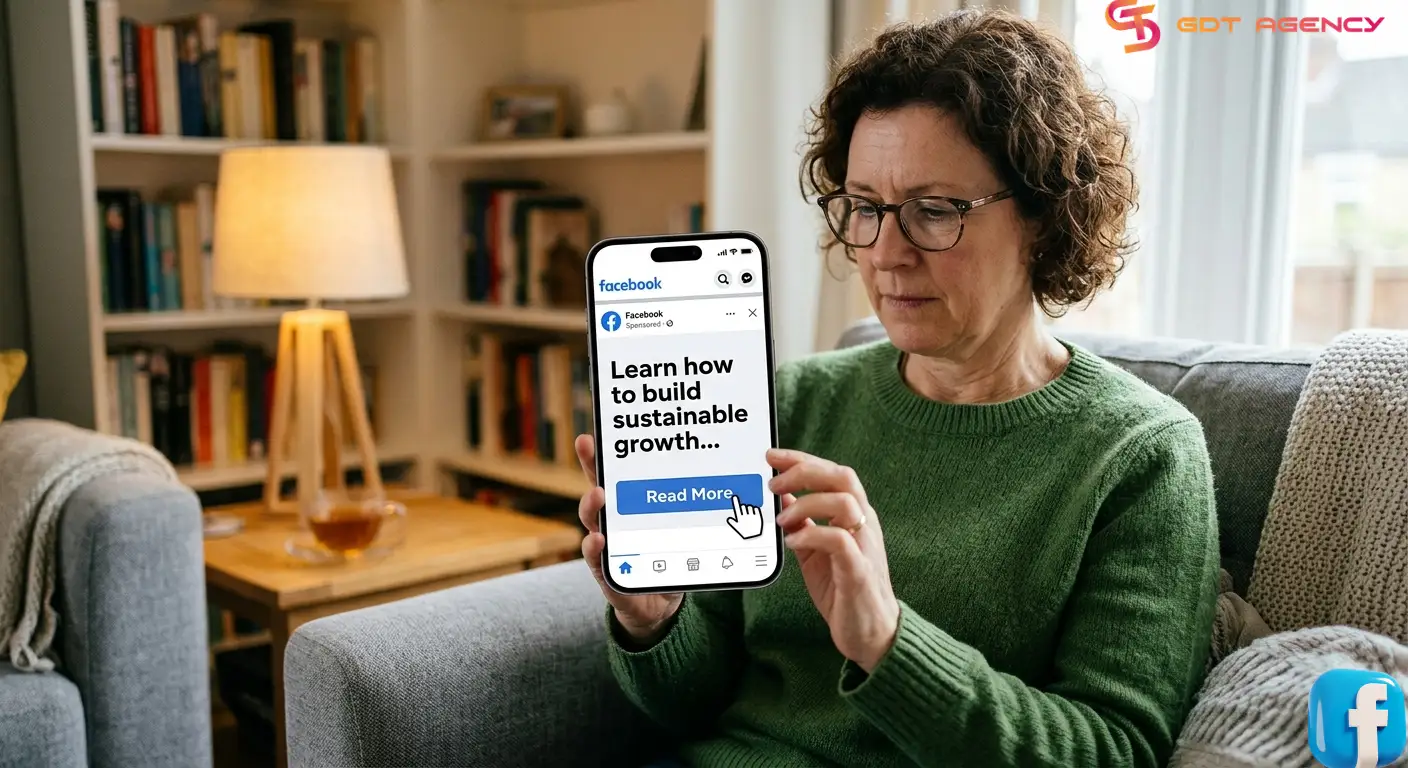
- The Power of the Headline: While Instagram hides the headline below the fold, Facebook puts it front and center. A strong, benefit-driven headline is your most powerful tool on Facebook.
- Long-Form Copy: We are seeing a resurgence of “story-telling” ad copy on Facebook. 300-500 word ad captions that solve a specific problem or share a customer success story are outperforming short “Shop Now” snippets in the B2B and SaaS space.
Cost Comparison: CPC, CPM, and CPA in 2026
To make an informed decision, you need to look at the hard numbers. In the current 2026 landscape, the Meta ad auction is more competitive than ever, but it’s also more efficient if you lean into AI.
Below is Average CPC and CPM by Placement, according to the data aggregated from Socialinsider’s 2025 Benchmarks reports and internal data from SaaS analytics platforms like Triple Whale.
| Platform | Placement | Avg. CPC (USD) | Avg. CPM (USD) |
| Feed (Desktop/Mobile) | $0.70 – $0.95 | $13.50 – $14.40 | |
| Right Column | $0.55 – $0.75 | $8.90 – $10.20 | |
| Stories | $0.60 – $0.85 | $11.00 – $12.50 | |
| Marketplace | $0.50 – $0.70 | $9.50 – $11.00 | |
| Feed | $1.20 – $1.45 | $15.20 – $16.50 | |
| Stories | $0.85 – $1.05 | $12.80 – $14.20 | |
| Reels | $0.75 – $0.95 | $10.50 – $12.00 | |
| Explore | $1.10 – $1.30 | $13.50 – $15.00 |
Instagram Ads often produce higher CPMs than Facebook Ads because competition for attention inside Reels, Stories, and visual placements remains intense. However, higher CPM does not automatically mean worse profitability.
A clothing brand may pay more to reach users on Instagram but still achieve lower CPA because visual discovery drives impulse purchases. On the other hand, Facebook campaigns sometimes generate cheaper clicks but lower purchase intent. Many advertisers see lower CPC on Facebook while conversion rates remain weaker.
In practical account management, advertisers should compare:
- Cost per qualified lead
- Cost per purchase
- Revenue per visitor
- Repeat purchase rate
A campaign with a higher CPM but stronger customer lifetime value often wins in the long term.
>>> Related Article: How Much Do Instagram Ads Cost
Instagram Ads vs Facebook Ads: Which One is Better for Business?
Choosing between Instagram Ads and Facebook Ads has become more difficult in 2026 because both platforms now operate under the same Meta advertising ecosystem. Many advertisers assume one platform will always outperform the other, but campaign results often depend on customer behavior, product type, and buying intent.
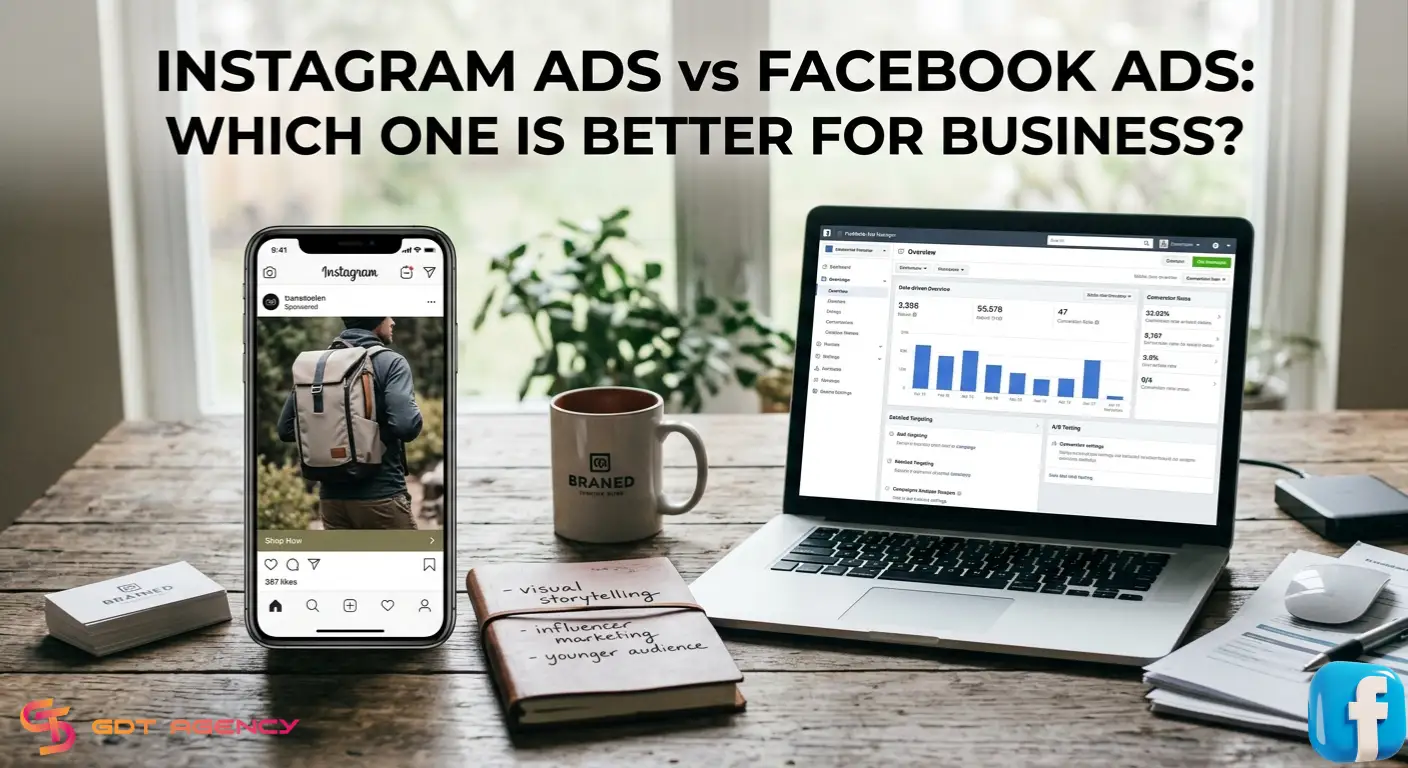
A fashion brand may struggle on Facebook but scale quickly on Instagram Reels, while a real estate business may generate cheaper yet lower-quality leads from Instagram compared with Facebook.
The real question is not which platform gets more engagement. The real question is which platform helps your business generate better outcomes, whether that means purchases, qualified leads, or long-term customer value.
Before deciding where to allocate budget, advertisers should understand when each platform tends to perform best.
When Should You Choose Instagram Ads?
Instagram Ads often make sense when:
- Your product looks visually attractive
- Your audience responds to trends or creators
- Short-form video drives attention
- Impulse purchases happen quickly
- Brand awareness matters
If your offer depends heavily on aesthetics, Instagram usually deserves more budget allocation.
When Should You Choose Facebook Ads?
Facebook Ads often make sense when:
- Your business sells services
- Trust matters before purchase
- Customers need education
- You target homeowners or older demographics
- Lead generation matters more than engagement
For many businesses, Facebook still produces stronger lead intent even when Instagram creates more engagement.
FAQs
1. Which is cheaper, Facebook or Instagram ads?
In 2026, Facebook Feed typically has a lower CPM than Instagram Feed, but Instagram Stories and Reels often provide the lowest CPC in the entire Meta ecosystem.
2. Is Instagram better than Facebook for B2B?
Generally, no. Facebook remains superior for B2B due to its group structures and longer-form content engagement. However, B2B brands are seeing rising success with “founder-led” content on Instagram Reels.
3. Can I run the same ad on both platforms?
Yes, and you should. Using Advantage+ Placements allows Meta to automatically adjust your ad creative for each platform, ensuring optimal performance across the entire network.
4. What is a good CTR for Meta ads in 2026?
Average CTRs hover around 1.10% for Ecommerce and 0.78% for B2B. Anything above 1.5% is considered excellent in the current competitive market.
5. Do I need a separate budget for Instagram and Facebook?
No. It is more efficient to use a single “Campaign Budget Optimization” (CBO) and let Meta’s AI allocate the funds to whichever platform or placement is delivering the best results in real-time.
Final Verdict: Which Platform Wins for Your Business?
In the Instagram ads vs Facebook ads debate of 2026, there is no single winner. The real winner is the advertiser who uses Advantage+ to let the AI decide the placement, while focusing their own energy on high-quality creative.
If you have any questions, need expert guidance to elevate your campaigns, or want to cooperate with a trustworthy provider to rent Facebook agency accounts, don’t hesitate to reach out to GDT Agency. Our team of experienced professionals is ready to provide tailored solutions and support to help you achieve your advertising goals.

Follow if you find it useful


You can contact us, with our experience in successfully deploying thousands of conversion advertising campaigns, GDT Agency confidently believes we can help you optimize effectiveness and maximize cost savings with advertising operations.

Top 8 Anti-detect Browsers for Multi-Ad Accounts Management
Managing multiple ad accounts across platforms like Meta, Google, and TikTok can be a significant
13/05/2026

Instagram Ads vs Facebook Ads 2026: Which Platform Wins for Your Business?
Instagram Ads vs Facebook Ads in 2026 does not have a single winner because the
13/05/2026

Mastering Instagram Interests For Ads: The Complete List (2026)
If you are about to include Instagram advertising in your marketing plan, then understanding interest
12/05/2026


