


RapidProxy Review 2026: Performance of a Residential Proxy Infrastructure


In 2026, proxy usage has moved far beyond simple IP masking. Modern platforms no longer evaluate traffic based only on IP reputation. Instead, they analyze behavioral patterns, browser fingerprints, request timing, and long-term session consistency. This shift has made residential proxy infrastructure a core component for businesses working in automation, data extraction, and multi-account environments.
RapidProxy is positioned within this category. Instead of presenting itself as a generic proxy provider, it focuses on structured residential connectivity designed for operational workloads rather than casual use. This RapidProxy review is based on practical usage scenarios, focusing on how the system behaves under real operational pressure rather than theoretical specifications.
RapidProxy Review: About Rapid Proxy
RapidProxy is a residential proxy platform built around real user IP networks. Its core idea is simple: simulate natural residential traffic so that requests blend into normal internet behavior.
Rather than offering a single type of proxy, the platform separates its infrastructure into two distinct models:
1. Rotating Residential Proxies
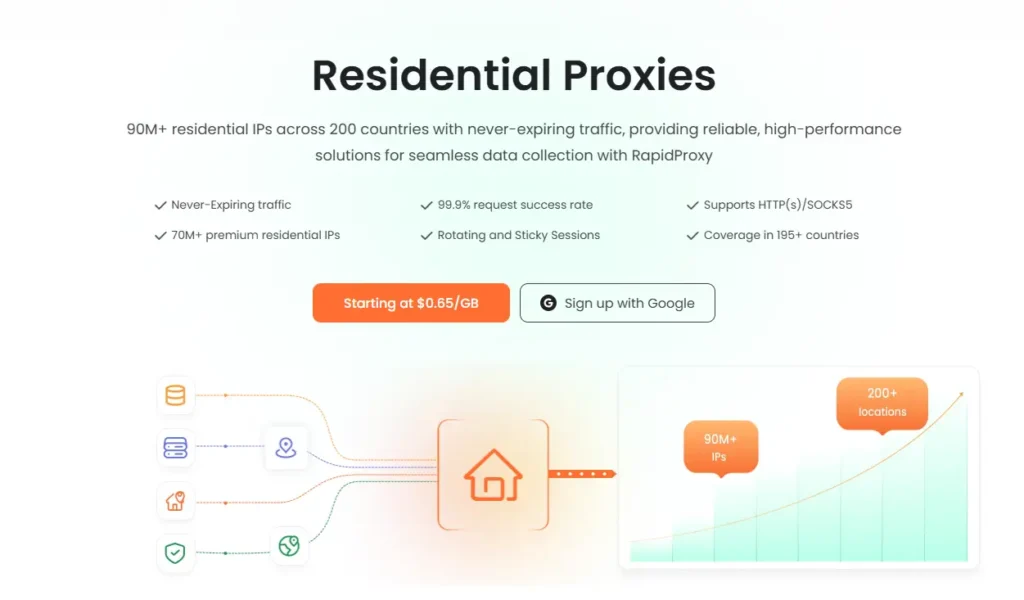
The rotating model continuously changes IP addresses during operation. In practice, this means each request or session can appear from a different residential location.
During testing, this setup behaved like a distributed traffic layer rather than a static connection tool.
It is particularly effective when tasks involve:
- Large volumes of repeated requests
- Continuous data extraction
- Short-lived sessions across multiple targets
- Distributed automation tasks
The main advantage here is not speed, but distribution. By spreading traffic across many residential endpoints, the system reduces pattern concentration, which is often what triggers detection systems in modern platforms.
2. Static Residential Proxies
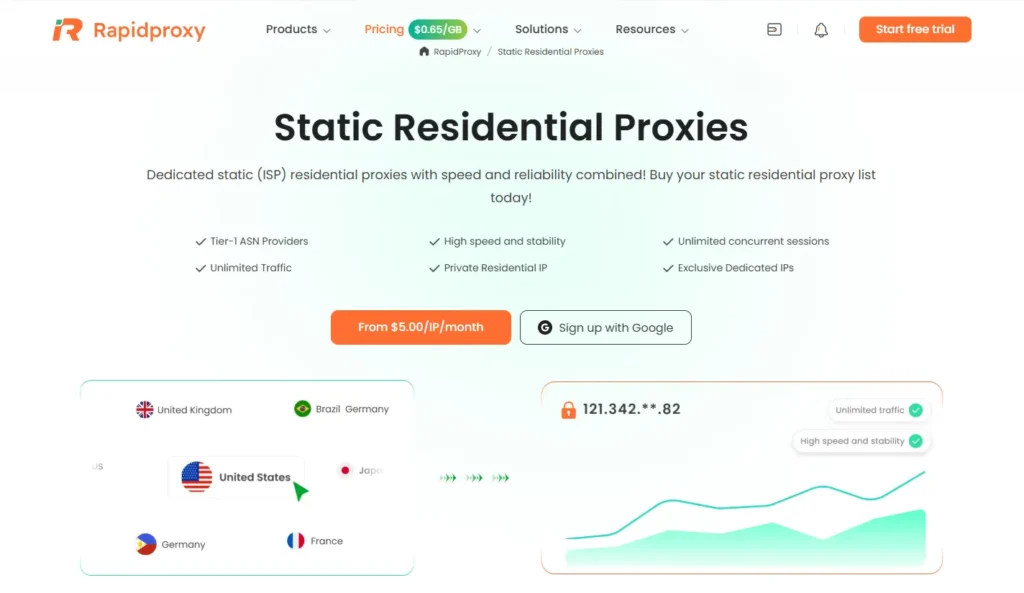
The second model focuses on consistency. Instead of rotating, it maintains a stable residential IP over time.
This type of connection behaves more like a real household internet session. Once assigned, the IP remains consistent, which allows long-term login behavior to appear more natural.
In testing, this model performed better in environments where session continuity mattered more than scale, such as:
- Logged-in dashboards
- Advertising accounts
- E-commerce seller platforms
- Long-duration browser sessions
Where rotating proxies focus on movement, fixed proxies focus on identity stability.
>>> This separation is not just a product feature. It defines how the system is meant to be used.
Rapid Proxy Review: Pros and Cons
Before you invest in a proxy service, it is worth understanding what Rapid Proxy does well and where it may fall short.
Operational Features That Stand Out
- Traffic Model Without Expiration Pressure: One notable aspect of RapidProxy is that usage is not tightly bound to expiration cycles. This allows bandwidth to be consumed based on operational needs rather than time constraints, which is useful for irregular workloads.
- Protocol Flexibility: Support for HTTP, HTTPS, and SOCKS5 makes the system adaptable to both browser-based and script-based environments. This reduces friction when switching between tools.
- Scalable Connection Handling: The system is built to handle multiple simultaneous sessions without forcing strict connection limits at the workflow level, which is important for automation-heavy environments.
Limitations in Practical Use
RapidProxy is not designed for users who expect an automated or simplified experience. Its structure is closer to infrastructure tooling than consumer software.
The main limitation is conceptual rather than technical: users must understand how to design workflows around rotating and fixed identity separation. Without that understanding, results may appear inconsistent.
Additionally, it is most effective in structured environments rather than casual browsing or light usage scenarios.
Is Rapid Browser Worth It for Advertisers?
Modern advertising platforms analyze browser fingerprints and IP consistency tightly, which triggers frequent account suspensions for standard users. While tools like RapidProxy provide the necessary residential network layer, large-scale advertisers still need verified business profiles to scale spend.
GDT Agency bridges this gap by pairing clean network infrastructure with whitelisted, high-trust ad accounts. To eliminate constant firefighting with disabled accounts, explore our high-trust agency facebook ad account to secure steady campaign execution.
Real Usage Behavior and Observations
One of the most noticeable aspects of RapidProxy is how clearly the two systems are separated. There is no overlap or hybrid confusion between dynamic and static modes. In real use, this creates a predictable workflow pattern:
- High-frequency tasks naturally route through rotating infrastructure
- Identity-sensitive tasks remain locked to a fixed IP
This structure reduces operational ambiguity, especially for teams running multiple workflows simultaneously. However, the system also assumes that users understand when to use each type. It is not designed to automatically decide for you.
Performance Perspective
Rather than measuring raw speed, the more relevant metric in 2026 proxy environments is behavioral stability under detection systems. Across different workloads, the following patterns were observed:
- Rotating connections handled scale effectively but naturally introduced variability in session continuity. This is expected and aligns with their design purpose.
- Fixed connections showed strong consistency over time, particularly in login-based environments where session trust matters.
- Neither model attempts to replace the other. They operate as two separate layers of infrastructure rather than competing options.
Integration in Real Workflows
RapidProxy is typically not used in isolation. It integrates into broader systems such as:
- Browser automation setups
- Scraping pipelines
- Multi-account management environments
- Testing frameworks
In these cases, the proxy layer acts as the identity and network abstraction layer between the tool and the target platform.
Setup is straightforward but assumes familiarity with proxy configuration. Users generally define:
- Proxy endpoint
- Authentication credentials
- Connection type (rotating or fixed)
Once configured, it functions as a background network layer rather than a visible tool.
Final Assessment
RapidProxy should not be viewed as a traditional proxy service. It is better understood as a residential network infrastructure system designed for operational workloads.
Its key design choice is separation, splitting traffic behavior into two distinct models rather than blending them into a single generalized product. This makes it particularly suitable for environments where:
- Large-scale automation is required
- Multiple account identities need separation
- Long-term sessions must remain stable
- Traffic behavior must resemble residential usage patterns
In short, RapidProxy is built for systems that treat networking as infrastructure rather than a simple connectivity tool.

Follow if you find it useful


You can contact us, with our experience in successfully deploying thousands of conversion advertising campaigns, GDT Agency confidently believes we can help you optimize effectiveness and maximize cost savings with advertising operations.

How to Get More Followers on Instagram to Grow Your Audience in 2026?
To get more followers on Instagram in 2026, you must focus on creating highly shareable
23/05/2026

How To Get TikTok Ad Credit For Your Business in 2026
The fastest way to get TikTok ad credit for your business in 2026 is by
22/05/2026

How to Run Successful Instagram Ads in 2026: The Creative & Infrastructure Blueprint
To run successful Instagram ads in 2026, advertisers must combine vertical-first creative optimization (specifically high-energy
19/05/2026


