


NiuProxy could help marketing teams control proxy spending in 2026, particularly when demand fluctuates between client projects. Its published residential plans combine small starting allocations, volume discounts, and traffic that the provider says does not expire. Together, these features offer a potentially useful purchasing model for agencies that need regional access without consuming the same amount of data every month.
However, savings depend on choosing an appropriate allocation and measuring the cost of completed work. The lowest advertised rate requires a substantial purchase, while unlimited plans introduce separate capacity considerations. For budget-conscious buyers, NiuProxy is worth evaluating through a limited pilot before making a larger commitment.
Disclosure: This brand-commissioned review of GDT Agency draws on public information reviewed on November 9, 2026. It does not include independent performance testing. Prices and product conditions should be confirmed before purchase.
How Does NiuProxy’s Pricing Fit Agency Budgets?
Small Allocations Make Initial Evaluation Easier
NiuProxy’s residential pricing page lists 1 GB at $1.20 per GB, 100 GB at $0.80 per GB, and 10,000 GB at $0.35 per GB. These figures describe different purchasing tiers, so the lowest rate should not be treated as the price available for every order. Source: residential pricing
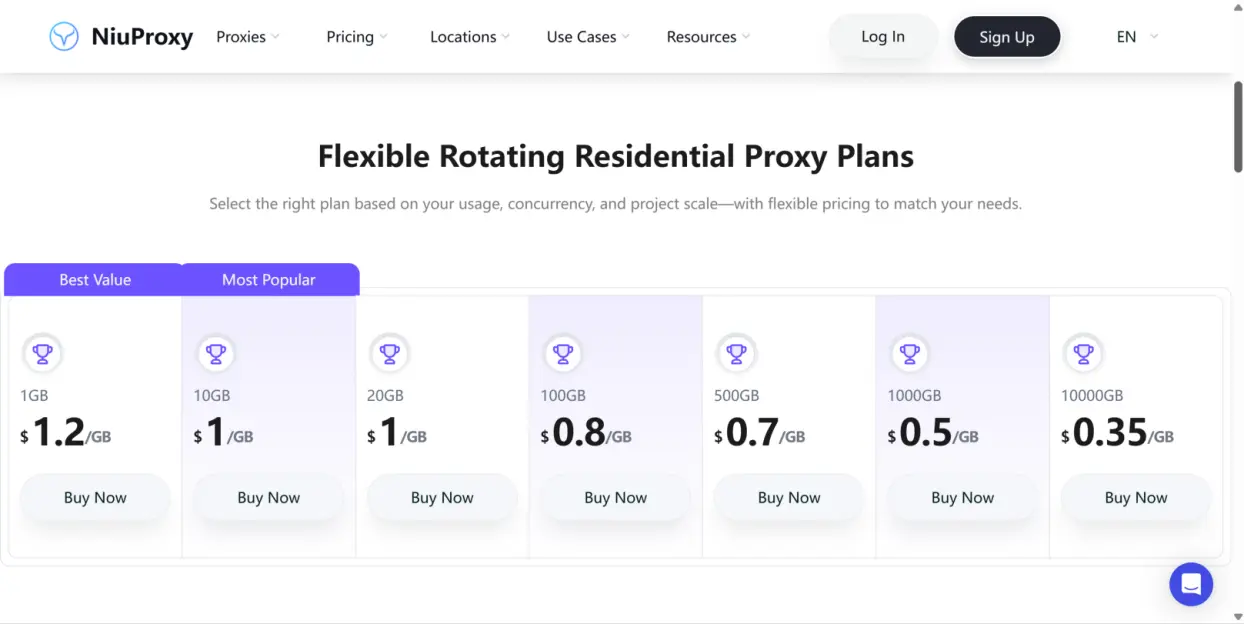
For an agency assessing a new supplier, a small allocation can support basic configuration checks and an initial sample of the intended workload. It limits the financial commitment while the team investigates whether the service meets its requirements.
Larger purchases become more relevant once demand is predictable. The displayed 10,000 GB tier implies a nominal $3,500 allocation. That may suit an established operation, but it would be a considerable commitment for occasional campaign checks.
The practical advantage is purchasing choice. The weakness is that the most attractive unit price may be irrelevant to smaller customers.
Non-Expiring Traffic May Reduce Purchasing Pressure
NiuProxy states that purchased residential traffic does not expire. Subject to the terms of the actual order, that could suit agencies whose demand rises during launches and falls between projects.
Consider a team conducting regional checks for a seasonal promotion. Its next comparable project may arrive several months later. Retaining unused traffic could make the original allocation more useful across that uneven schedule.
Nevertheless, non-expiring traffic is still prepaid capacity. Buyers should confirm refund rules and account conditions before purchasing more than they immediately need. Flexibility is valuable when it supports realistic demand.
Where Can Marketing Teams Put NiuProxy to Work?
Checking Regional Campaign Experiences
NiuProxy identifies localized campaign inspection and ad verification among its applications. Its website also positions the service for e-commerce research and SEO monitoring. Source: NiuProxy official website
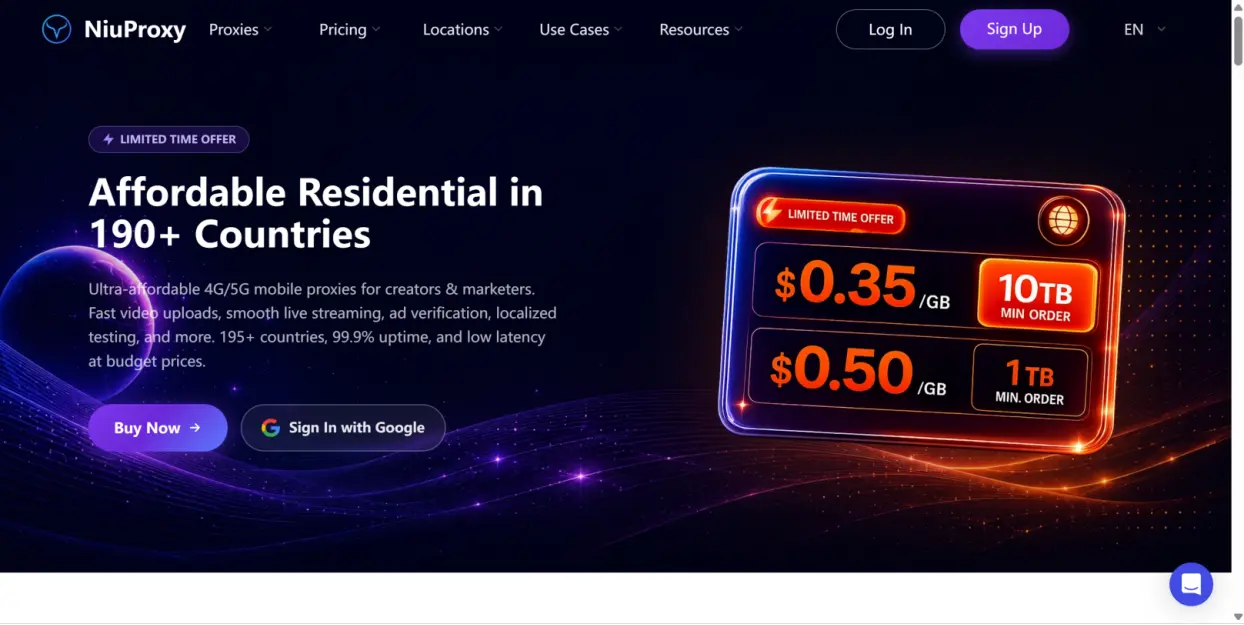
An agency could evaluate it for checking whether campaign destinations display the appropriate language, currency, and promotional content in selected markets. Discovering an incorrect regional offer before launch can prevent avoidable rework.
A proxy supplies only part of the testing environment. Cookies, browser language, device settings, and account status can also affect page content. Teams should document those variables so their observations remain reproducible.
Supporting Recurring Market Research
Public-price monitoring is another potential application. A retailer may want periodic observations from several regions to inform its market research.
The budget question is how much traffic each usable observation requires. A lightweight page check and a full browser session can have very different consumption patterns.
Before estimating monthly spend, teams should run a representative sample and record both traffic usage and completed results. Research should also account for taxes, delivery settings, and promotional eligibility, which can explain apparent price differences.
This approach connects proxy expenditure to useful information rather than treating bandwidth consumption as the measure of success.
Which NiuProxy Plan Makes Financial Sense?
Match the Connection Type to the Task
NiuProxy lists residential, static ISP, rotating mobile, static mobile, datacenter, and unlimited residential products. Their connection characteristics and targeting options vary. Source: product catalog
That selection creates flexibility, but choosing the cheapest category without considering the workflow can waste money.
A multi-step testing session may need a consistent address. A project collecting separate regional observations may benefit from rotation. Mobile-related testing may justify investigating a carrier-based connection.
Buyers should specify the required locations, session duration, and expected activity before comparing prices. Product fit determines whether purchased capacity produces useful work.
Treat Unlimited Traffic as a Capacity Decision
NiuProxy’s unlimited residential page includes selectable bandwidth and concurrency settings. This means unlimited traffic should not be interpreted as unlimited throughput. Source: unlimited residential pricing
For sustained workloads, a time-based plan may make expenditure more predictable. For intermittent projects, metered traffic may be easier to align with actual demand.
The comparison should use expected utilization over the full billing period. Paying for continuous capacity can be inefficient if the workload runs only occasionally.
Buyers should also clarify the page’s use of concurrency and QPS terminology: simultaneous connections and requests per second describe different constraints.
What Are NiuProxy’s Main Advantages and Drawbacks?
Advantages for Budget-Conscious Teams
NiuProxy’s published offer has three commercially relevant strengths: a small starting allocation, lower residential unit rates at higher volumes, and a stated non-expiration policy.
Together, these provide a possible progression from testing to recurring use. Its broader product catalog also gives teams alternatives when their session or network requirements change.
These are advantages of the advertised purchasing structure. They do not establish that NiuProxy delivers better results than competing providers.
Drawbacks Buyers Should Account For
The lowest residential rate requires a large allocation, which limits its relevance for smaller projects. Multiple product categories also add selection work: buyers need to establish which features apply to their order.
Performance remains another uncertainty. This review has not independently measured speed, location accuracy, or successful task completion. Published support availability likewise does not establish resolution quality.
Finally, teams should request a clear explanation of billable traffic, including how uploads, downloads, and failed requests are counted. Without that information, forecasting costs is difficult.
Is NiuProxy the Right Choice for Your Team?
NiuProxy deserves consideration when flexible purchasing and uneven project demand are central concerns. Its potential value is strongest for teams that can estimate usage and expand purchases gradually.
A useful pilot should track four outcomes: completed tasks, billed traffic, staff time, and support quality. These reveal whether the service saves money at the workflow level.
The purchasing decision should follow that evidence. Review current plans on the NiuProxy website, confirm the applicable conditions, and increase spending only when observed results justify it.