How to Get a Facebook Agency Ad Account: Requirements and Steps

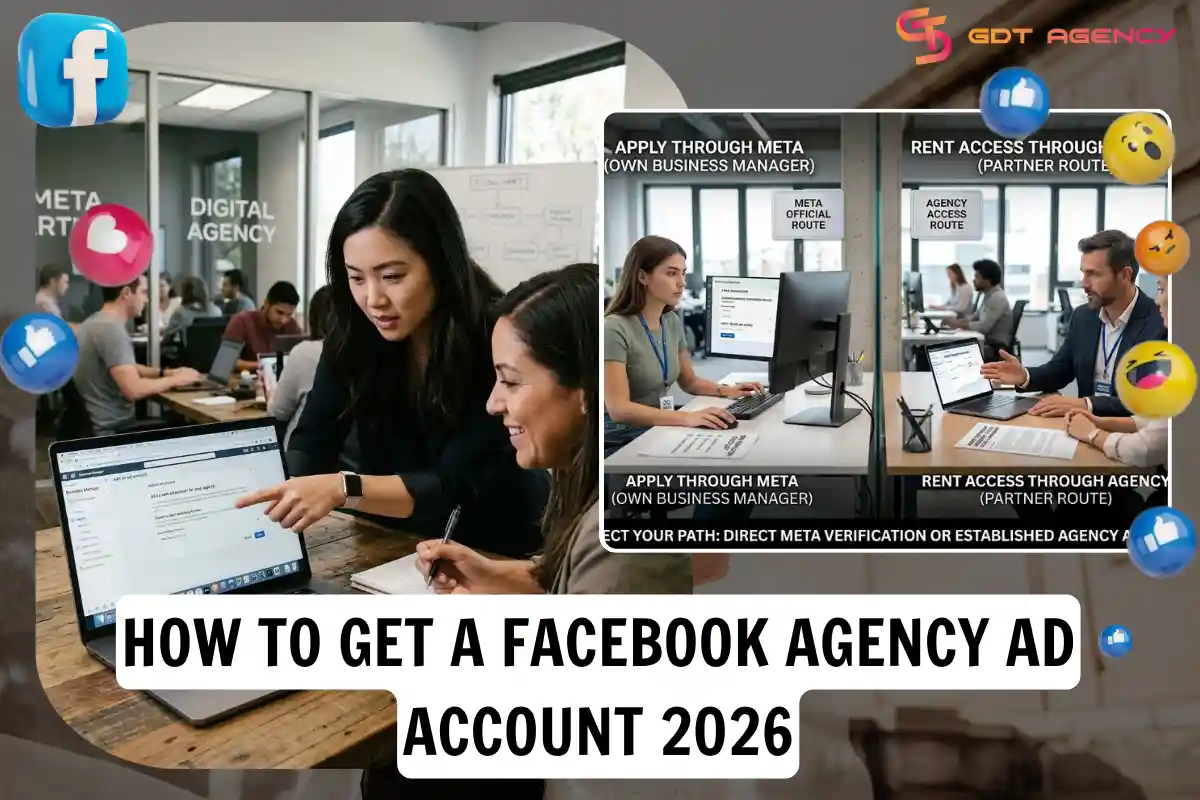
Advertisers can get a Facebook agency ad account through 2 main routes: applying directly to Meta or renting access through an established agency. The direct route requires Meta to review factors such as your Business Manager, verification status, and previous advertising activity. The rental route gives you access through an agency that has already built the required account history. Your choice usually depends on how quickly you need to start advertising and whether your business already meets Meta’s requirements. This guide will show you the details of two main routes to help advertisers understand how to get Facebook agency ad account.
- How Do You Get a Facebook Agency Ad Account?
- How Do You Apply Through Meta Directly?
- How Do You Get One Through an Agency Instead of Applying Directly?
- What Do You Need to Get a Facebook Agency Ad Account?
- Do You Need to Be a Meta Business Partner First?
- How Long Does It Take to Get Approved?
- Can You Get a Facebook Agency Ad Account Without Business Verification?
- How Many Ad Accounts Can You Get Under One Agency Business Manager?
- Final Thoughts
- Frequently Asked Questions
- Can a personal Facebook profile apply for an agency ad account?
- Does a rejected agency ad account request hurt future applications?
- Can you get a Facebook agency ad account for a brand-new business with no ad history?
- Is there a cost to get a Facebook agency ad account?
- Can one business hold both a personal ad account and an agency ad account at the same time?
How Do You Get a Facebook Agency Ad Account?
There are 2 ways to get a Facebook agency ad account. You can apply through Meta using your own verified Business Manager, or you can obtain access through an agency that already operates qualified agency accounts.
The direct option works better for businesses that want to establish and control their own long-term advertising infrastructure. The agency option works better when speed matters or when your existing business does not yet satisfy Meta’s verification and spending requirements.
As an expert at GDT Agency with nearly 10 years of experience working with Facebook ads, including Facebook agency ad accounts, I have worked with businesses using both routes and seen how account history, verification status, and spending activity can affect access to higher-level advertising infrastructure.
Both routes ultimately provide access to an agency-level advertising environment with higher trust signals, greater spending capacity, and features that standard personal accounts do not provide.
>>> Before looking at the requirements and application process, it helps to understand what a Facebook agency ad account is and how it works. Read our guide on What Is Facebook Agency Ad Account? How It Works for Advertisers to learn how agency accounts differ from standard ad accounts and why advertisers use them.
How Do You Apply Through Meta Directly?
The direct application route requires you to establish a Business Manager, complete business verification, and request an ad account through the verified business environment. This approach gives you ownership and control of the infrastructure over the long term, but Meta must first determine that your business meets its approval requirements.
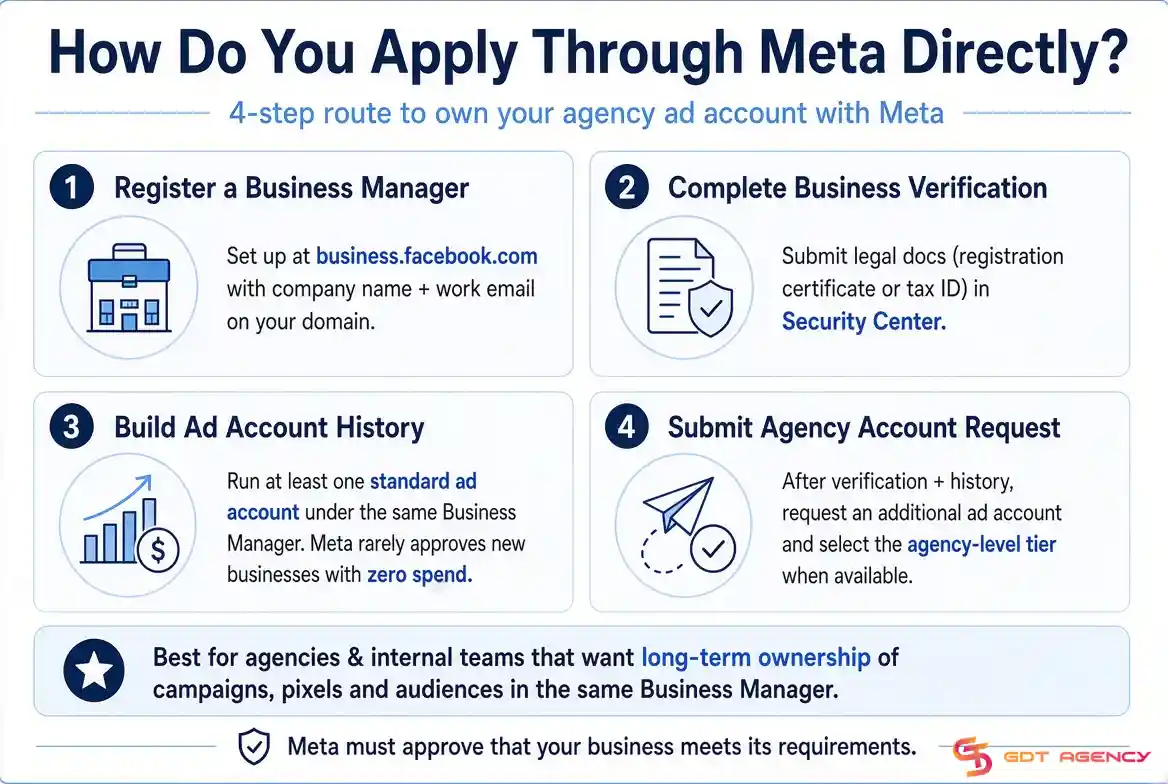
The process consists of 4 main stages:
- Register a Business Manager: Set up a Business Manager at business.facebook.com with your company name and a work email connected to your domain.
- Complete business verification: Provide your legal business documentation, such as a registration certificate or tax ID, through the Security Center.
- Build ad account history: Operate at least one standard ad account under the same Business Manager because Meta rarely gives agency status to a completely new business with no spending history.
- Submit the agency account request: After your business has verification and account history, request an additional ad account and choose the agency-level tier when Meta makes that option available.
This approach makes the most sense for agencies and internal advertising teams that intend to maintain the same Business Manager for the long term. The business can keep its campaigns, pixels, and audiences within the same infrastructure over time.
How Do You Get One Through an Agency Instead of Applying Directly?
You can obtain a Facebook agency ad account through another agency by becoming a client inside that agency’s existing qualified Business Manager. This approach avoids the direct Meta approval process because the agency already has the verification and spending history associated with its infrastructure.
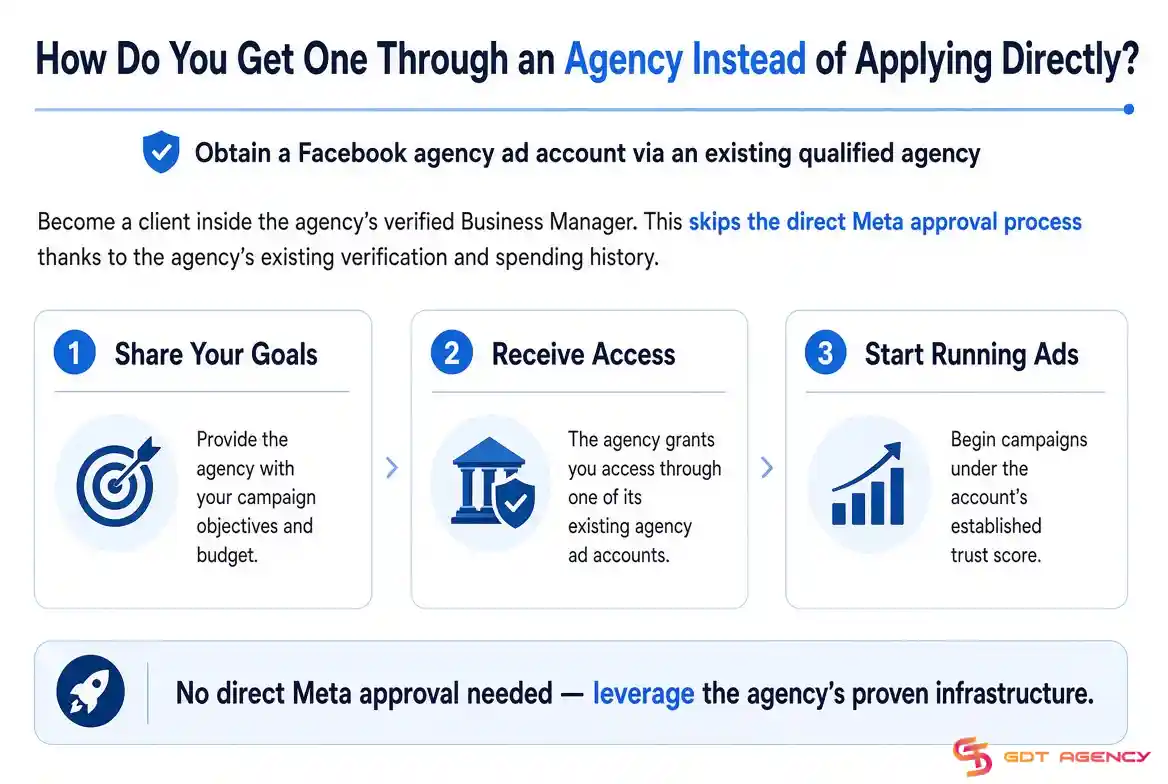
The process normally follows 3 steps.
- You provide the agency with your campaign objectives and budget.
- The agency then gives you access through one of its existing agency ad accounts.
- You can then begin running campaigns under the account’s established trust score.
GDT Agency currently operates this model for advertisers that need to launch quickly or that repeatedly encounter spending limits on their own accounts. For example, one GIP Fulfillment client experienced bans every 2 to 3 days on newly created accounts. After moving to GDT’s rented agency accounts, the client operated more than fifteen accounts with zero bans over four months.
This option prioritizes speed instead of direct ownership. You gain access to an established account structure without waiting for Meta to review and approve your own application. If you choose the agency route, our Facebook Ad Account Agency Client Onboarding guide explains what to expect during the onboarding process and how agencies typically set up access for clients.
What Do You Need to Get a Facebook Agency Ad Account?
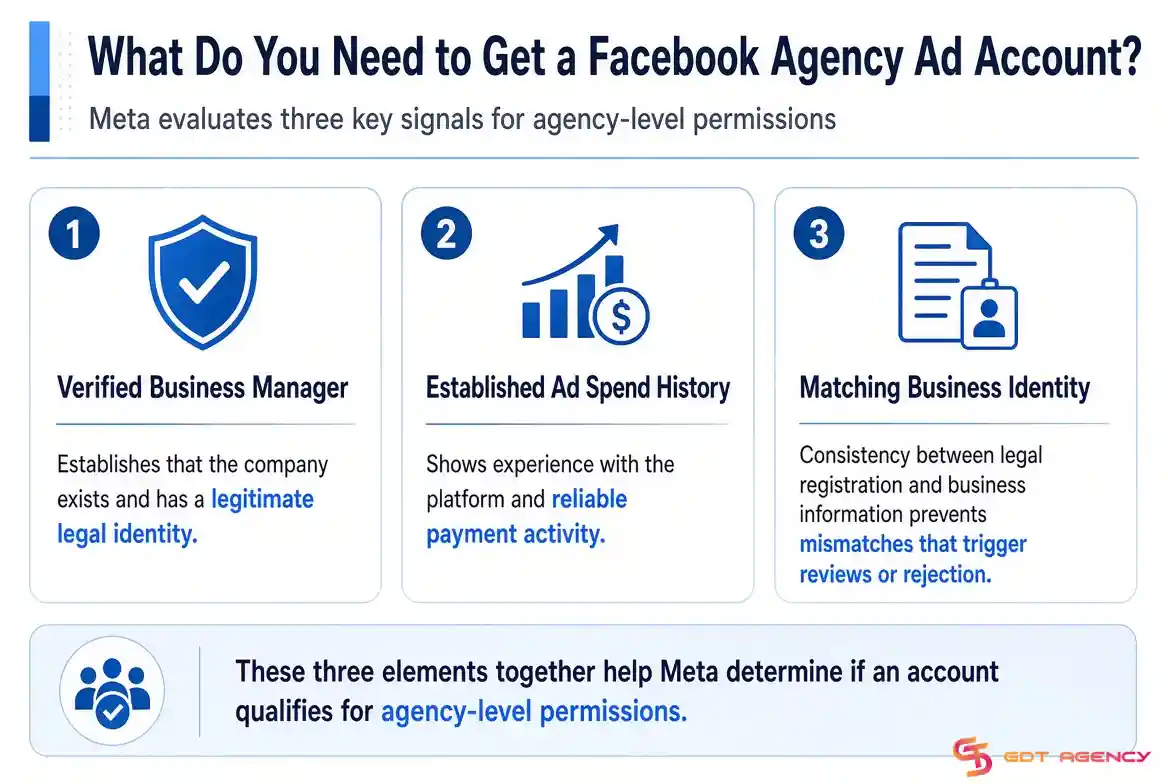
A Facebook agency ad account generally requires a verified Business Manager, an established advertising spend history, and a business identity that matches your legal registration. Meta evaluates these areas when determining whether an account qualifies for agency-level permissions.
Each requirement gives Meta a different signal about the business. Business verification establishes that the company exists and has a legitimate legal identity. Spending history demonstrates that the account holder has experience with the platform and has maintained reliable payment activity. Consistency between the legal identity and the business information helps prevent identity mismatches that can trigger additional reviews or rejection.
Your account history also plays an important role. Meta does not provide a specific public spending threshold for qualifying for an agency ad account, but an active account with several months of consistent spending generally presents a stronger profile than an account created shortly before an upgrade request.
Three account signals carry particular importance:
- Account age: A Business Manager that has existed for several months generally has a stronger review history than one created only a few days before the application.
- Payment reliability: An account without failed payments or billing disputes presents a lower-risk payment history to Meta’s review systems.
- Policy compliance: An account without a record of repeated ad disapprovals or account restrictions generally faces fewer obstacles during review.
Advertisers without an established account history can instead choose a rented Facebook agency ad account. The rented account already has an existing spending and compliance history, which can make it a practical option for businesses that do not yet have the account history required for their own agency-level setup.
Do You Need to Be a Meta Business Partner First?
No. Meta Business Partner status is not required before you can obtain a Facebook agency ad account. Meta treats Business Partner status as a separate program for agencies that manage significant numbers of client accounts, rather than as a prerequisite for requesting an individual agency account.
Business Partner status can become useful as an agency expands. Partners receive benefits such as priority support, early access to new advertising features, and a badge that can provide additional credibility when working with clients.
Business Partner status therefore represents a growth milestone for an agency rather than an entry requirement for obtaining one agency ad account.
How Long Does It Take to Get Approved?
The direct Meta application can take several business days to several weeks to receive approval. The exact timeframe depends on factors such as the completeness of your verification documents and the amount of history associated with your Business Manager.
The agency rental route can move much faster and may take only a matter of hours because the underlying agency account has already passed Meta’s approval process.
The direct application generally involves 2 review stages:
- Document verification: This stage can take 1 to 5 business days under normal circumstances. Meta can take longer when it requests additional documents or when the business name differs from the information shown on the legal registration.
- Account-level review: This stage considers the Business Manager’s existing spending and policy history. Businesses with a longer and cleaner record generally have a stronger position during this part of the review.
The rental model avoids these two waiting periods because the underlying account already has its verification, history, and trust score.
This timing advantage makes agency rental particularly attractive to advertisers with an urgent campaign launch or advertisers who have already experienced a rejection through Meta’s direct application. Instead of submitting the same application again, they can work with a provider such as GDT Agency and gain access through an already-established account.
Can You Get a Facebook Agency Ad Account Without Business Verification?
No, advertisers generally cannot obtain a Facebook agency ad account directly from Meta without completing business verification. Verification represents one of the main checks Meta uses during the approval process.
The situation differs when an advertiser rents an account through an agency. The advertiser can bypass the direct verification requirement because the agency’s existing business already has verified status.
This difference makes agency rental particularly attractive to smaller businesses and new entities that have not completed Meta’s verification process. It can also help businesses operating in countries where Meta’s verification process moves slowly or inconsistently.
How Many Ad Accounts Can You Get Under One Agency Business Manager?
Meta generally gives an agency Business Manager a specific ad account limit, and that limit can increase as the Business Manager develops a longer and cleaner history. New agency Business Managers often receive a smaller allocation, while established Business Managers with strong spending records and no policy violations can request higher limits over time.
The limit therefore grows with the account’s trust rather than remaining permanently fixed. Agencies managing large numbers of clients often operate several Business Managers at the same time and distribute their ad accounts across those Business Managers to avoid reaching the limit of a single structure.
Final Thoughts
Getting a Facebook agency ad account ultimately gives you two paths to choose from. You can build your own qualifications and apply directly through Meta, or you can access an established account through an agency that has already developed the required trust and history.
The direct route makes more sense for businesses that want full ownership and long-term control. The agency route makes more sense for businesses that need to start advertising quickly or repeatedly encounter spending restrictions on their own accounts.
Neither option serves exactly the same purpose. Your choice depends on whether ownership or speed matters more for your current situation.
Approval also represents only the beginning of the process. Once you have the account, you still need to connect a payment method, assign the correct permissions, and complete the campaign setup before you can run advertising.
Providers such as GDT Agency combine account access with setup support, which makes the agency route attractive to advertisers who prioritize speed instead of waiting through Meta’s own review process.
Frequently Asked Questions
Can a personal Facebook profile apply for an agency ad account?
No. A personal Facebook profile cannot directly hold an agency ad account. A Business Manager holds the agency account instead. An individual can create and manage a Business Manager through a personal profile, but the agency account itself remains under the business entity.
Does a rejected agency ad account request hurt future applications?
A single rejection does not permanently prevent you from applying again. Meta does retain the Business Manager’s history, however, and repeated rejections within a short period can make future reviews take longer.
Most advertisers address the problem that caused the rejection, such as incomplete business verification, before submitting another request.
Can you get a Facebook agency ad account for a brand-new business with no ad history?
Obtaining one directly through Meta can be difficult for a brand-new business without advertising history. Meta generally favors accounts that already have spending and policy records. Therefore, renting an agency account provides a faster alternative because the established agency account already has the required history.
Is there a cost to get a Facebook agency ad account?
Applying directly through Meta does not cost anything beyond your normal advertising spend. Obtaining an account through an agency usually involves a service fee or an additional charge on ad spend because you are paying for access to an established account and the support associated with it.
Can one business hold both a personal ad account and an agency ad account at the same time?
Yes. A business can have both a personal ad account and an agency ad account under the same Business Manager. Many advertisers maintain both types of accounts and use them for different purposes. They can use the personal account for smaller campaigns while reserving the agency account for larger campaigns and higher-spend activity.