Facebook Postpaid Ad Account: How It Works and When You Should Use It

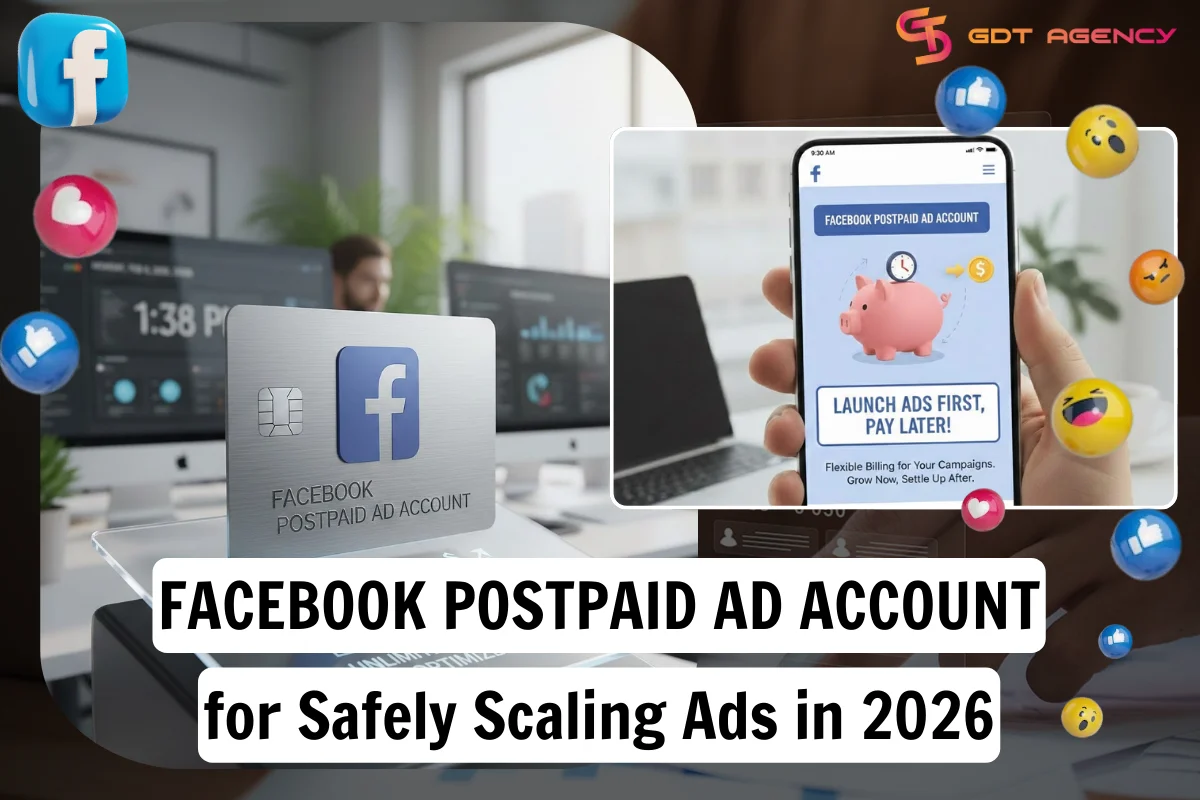
A Facebook postpaid ad account is a billing model that lets advertisers run campaigns first and pay later, instead of preloading a balance before ads go live. Meta automatically charges the linked payment method once spending reaches a billing threshold or the monthly billing date arrives. Because of this, postpaid accounts remove the friction of manual top-ups and keep campaigns delivering without interruption.
To understand why this matters, it helps to look at what a postpaid account actually is. Specifically, it is an advertising account where ad spend is tracked in real time and billed afterward, rather than drawn down from funds added in advance. This structure is the default for most established Business Manager accounts once a supported payment method is attached.
However, postpaid billing is not automatically the better choice for every advertiser — it comes with a clear set of advantages and a clear set of risks. On one side, it enables uninterrupted delivery, stronger cash flow flexibility, and rising billing thresholds for accounts with clean payment history. On the other side, it exposes advertisers to overspending, sudden restrictions when a charge fails, and low starting thresholds for new accounts.
Beyond that, choosing between postpaid and prepaid ultimately comes down to how much control an advertiser wants over liquidity versus how much they need uninterrupted scale. To explore this fully, the sections below break down what a postpaid account is, how it compares with prepaid billing, and how to set one up correctly inside Business Manager.
- What Is a Facebook Postpaid Ad Account?
- Threshold-based charging
- Calendar-based charging
- Facebook Postpaid Ad Account: Advantages and Limitations
- Advantages of a Postpaid Ad Account
- Limitations of a Postpaid Ad Account
- Facebook Postpaid Ad Account vs. Prepaid Ad Account: What Are the Differences?
- How to Create a Facebook Postpaid Ad Account?
- Step 1: Access Business Manager
- Step 2: Create a New Ad Account
- Step 3: Set Currency and Time Zone
- Step 4: Add a Payment Method
- Step 5: Assign the Payment Method to the Ad Account
- Conclusion
- FAQs
- 1. What is a Facebook postpaid ad account?
- 2. How does Facebook postpaid billing work?
- 3. Does Facebook automatically give you a postpaid ad account?
- 4. Can I switch a Facebook postpaid ad account to prepaid?
- 5. What happens if a Facebook postpaid payment fails?
- 6. Is a Facebook postpaid ad account better than a prepaid ad account?
What Is a Facebook Postpaid Ad Account?
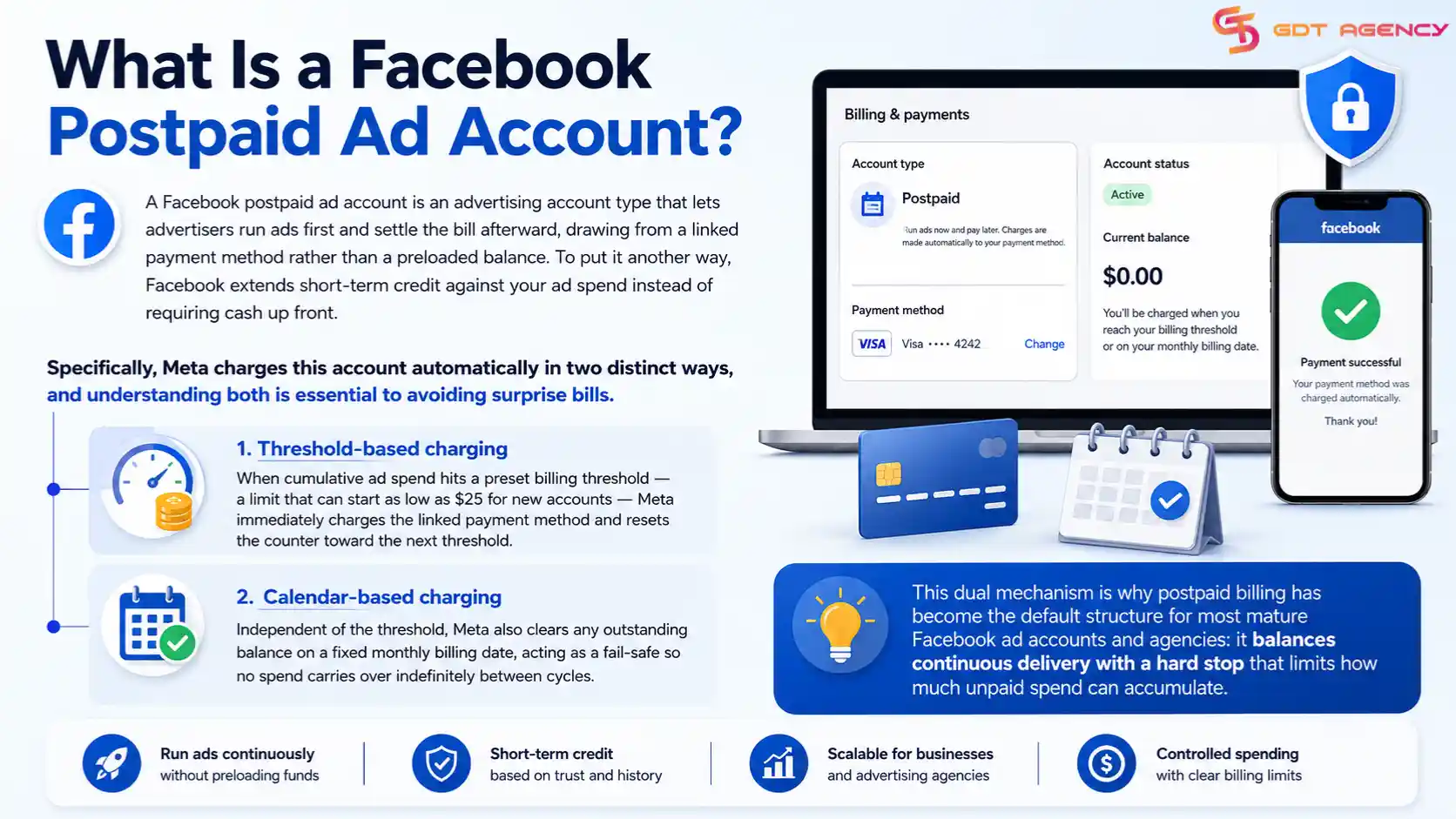
A Facebook postpaid ad account is an advertising account type that lets advertisers run ads first and settle the bill afterward, drawing from a linked payment method rather than a preloaded balance. To put it another way, Facebook extends short-term credit against your ad spend instead of requiring cash up front.
Specifically, Meta charges this account automatically in two distinct ways, and understanding both is essential to avoiding surprise bills.
Threshold-based charging
When cumulative ad spend hits a preset billing threshold — a limit that can start as low as $25 for new accounts — Meta immediately charges the linked payment method and resets the counter toward the next threshold.
Calendar-based charging
Independent of the threshold, Meta also clears any outstanding balance on a fixed monthly billing date, acting as a fail-safe so no spend carries over indefinitely between cycles.
This dual mechanism is why postpaid billing has become the default structure for most mature Facebook ad accounts and agencies: it balances continuous delivery with a hard stop that limits how much unpaid spend can accumulate.
→ To better understand how postpaid billing fits into Meta’s advertising ecosystem, read Facebook Ad Account Infrastructure: What It Is & How It Works. It explains how Business Manager, ad accounts, billing, payment methods, and permissions work together to support campaign delivery and account management.
Facebook Postpaid Ad Account: Advantages and Limitations
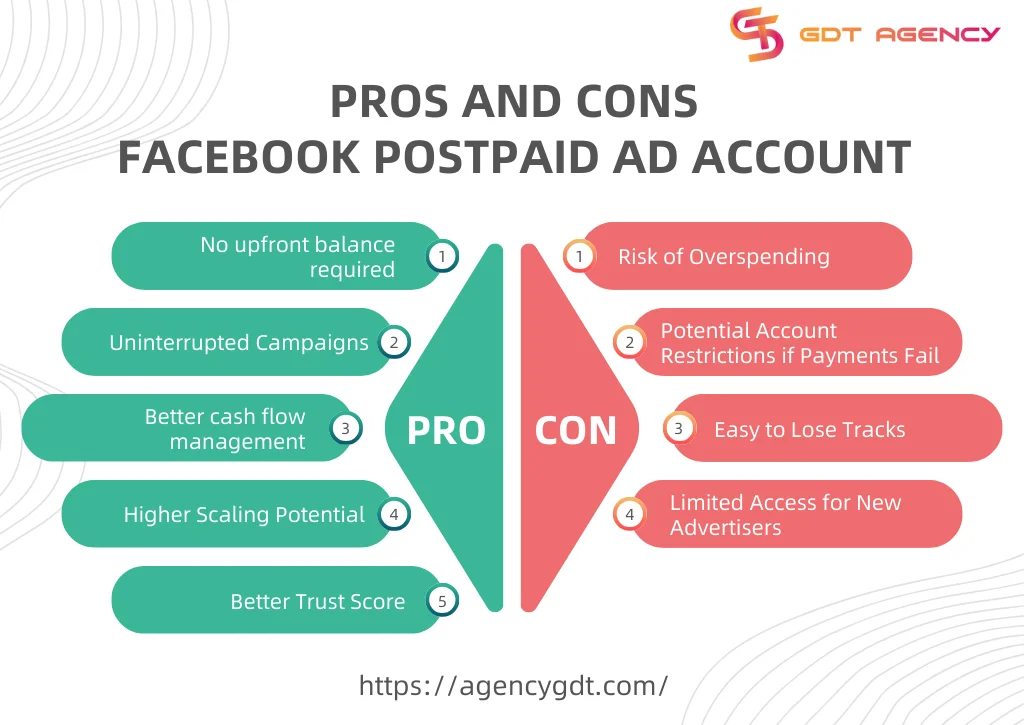
Facebook postpaid ad accounts carry five core advantages and four notable limitations, and weighing them against campaign scale and payment discipline determines whether this billing model is the right fit. To illustrate, an agency running high-volume, time-sensitive campaigns benefits far more from postpaid flexibility than a small business tightly managing a fixed monthly budget.
Some advertisers argue postpaid accounts are not the safest option for beginners, since campaigns keep running until Meta processes payment and costs can build up faster than expected without close monitoring. Drawing on more than 5 years of hands-on work with multiple Facebook ad accounts from standard to Facebook agency ad accounts at GDT Agency, the more useful framing is that the right billing model depends less on postpaid versus prepaid and more on campaign scale, cash flow strategy, and operational discipline. In practice, postpaid tends to suit advertisers who need consistent delivery and already have stable payment processes, while prepaid suits businesses that prioritize tight spending control.
Advantages of a Postpaid Ad Account
- No upfront balance required: Campaigns launch and scale before any cash changes hands; Meta only charges once a threshold or the monthly date is reached, which reduces friction and keeps delivery smooth.
- Uninterrupted campaigns: Since ads aren’t tied to a prepaid balance, they’re far less likely to pause from insufficient funds or a forgotten top-up, which matters most when scaling, running time-sensitive promotions, or managing several campaigns at once.
- Better cash flow management: Postpaid billing lets advertisers allocate budget more efficiently, particularly useful for businesses running multiple ad channels simultaneously.
- Higher scaling potential: Because billing thresholds rise as payment history improves, postpaid accounts suit high-volume or time-sensitive campaigns where delays in delivery directly cost performance.
- Stronger trust score: A clean payment history builds trust with Meta’s review systems, which can smooth ad approvals; as history improves, Facebook gradually raises the billing threshold to allow larger daily and monthly spend.
Limitations of a Postpaid Ad Account
- Risk of overspending: Because charges happen automatically, an unmonitored, high-performing but expensive campaign can generate a large bill before the advertiser notices.
- Account restrictions if payments fail: Postpaid accounts are more prone to payment-method flags; if a charge fails due to insufficient funds or a bank block, Meta may disable the account immediately.
- Easy to lose track of spend: Advertisers managing multiple accounts can lose visibility into how much is owed, which risks cash flow problems when several bills land at once.
- Limited access for new advertisers: Because Meta manages credit risk through an incremental trust system, new or unverified accounts often start with low billing thresholds, sometimes as low as $25.
Facebook Postpaid Ad Account vs. Prepaid Ad Account: What Are the Differences?
The postpaid account wins on delivery continuity and scaling flexibility, while the prepaid ad account wins on spending control and predictability, with the core difference being when payment happens and how much liquidity control the advertiser retains. Specifically, postpaid draws from a stored payment method after spend accrues, while prepaid draws from a balance funded in advance.
The table below lays out how the two models compare across the factors that matter most when choosing a billing structure.
| Criteria | Why It Matters |
| Setup time | Determines how fast you can launch campaigns |
| Spend limit | Sets the ceiling for how much you can invest monthly |
| Support availability | Affects how quickly issues get resolved |
| Compliance policy | Reduces the chance of unexpected suspension |
| Pricing transparency | Prevents surprise fees later in the relationship |
In short, a Facebook postpaid ad account offers more control over delivery continuity and fewer interruptions than a prepaid account, provided the payment method and account history stay in good standing.
How to Create a Facebook Postpaid Ad Account?
Creating a postpaid ad account means completing five setup steps inside Business Manager, since Facebook assigns this billing model automatically based on account history, business credibility, and payment behavior rather than a manual toggle. To begin, most regions default to a postpaid structure the moment a supported credit or debit card is linked.
Step 1: Access Business Manager
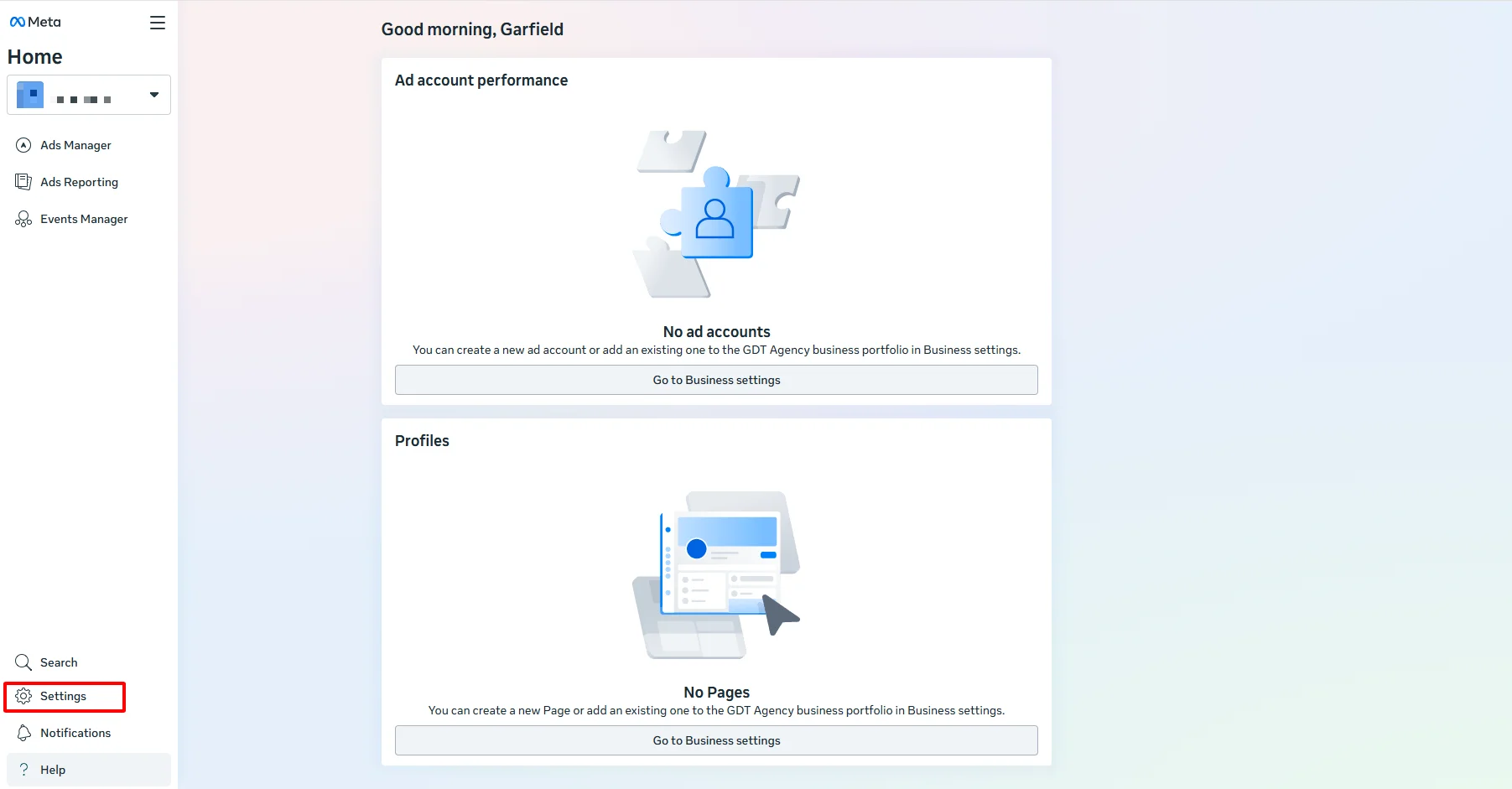
Postpaid accounts are almost always tied to a Business Manager rather than a personal profile, since Business Manager is where Facebook centralizes ad accounts, billing, and business verification. Start by going to business.facebook.com and navigating to Business Settings.
Step 2: Create a New Ad Account
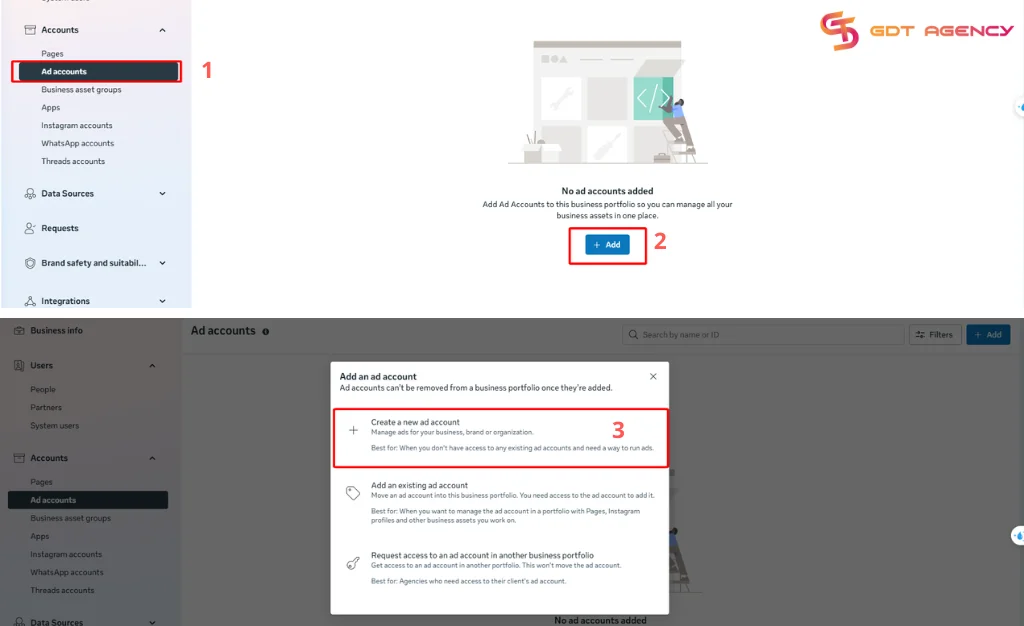
Under the Accounts tab, select Ad Accounts, then Add, then Create a New Ad Account to begin the setup process.
Step 3: Set Currency and Time Zone
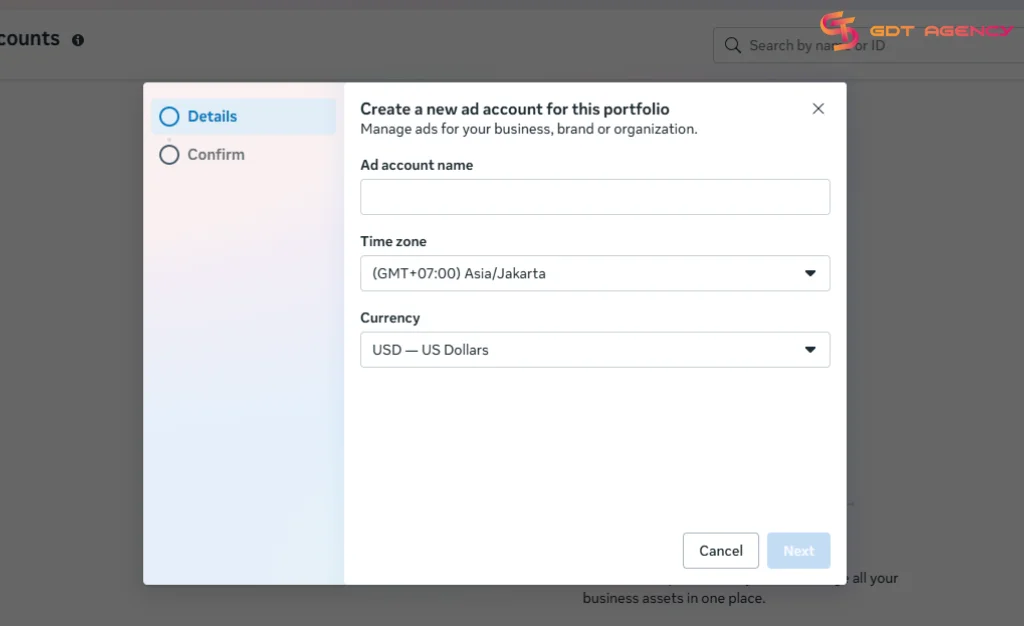
These settings are permanent once confirmed, so this step deserves extra caution — currency and time zone are effectively locked after setup is finished. Based on five years of hands-on experience with Facebook advertising, choosing a high-trust currency such as USD or EUR can sometimes support longer-term account stability.
Step 4: Add a Payment Method
Navigate to Payment Methods in Business Manager and add a corporate credit card or a verified PayPal account. Facebook uses this payment method to evaluate payment success rate, chargeback history, and overall account trust level — which makes a clean payment history critical for postpaid eligibility.
Step 5: Assign the Payment Method to the Ad Account
Return to Ad Account settings, open Payment Settings, and select the card just added. If the region and card type support it, Meta automatically designates the account as Automatic Payments (postpaid). To confirm, go to Ads Manager, then Billing, then Payment Settings — if billing thresholds and automatic charges appear instead of manual top-ups, the account is running on postpaid billing.
Conclusion
Rather than topping up a balance in advance, a Facebook postpaid ad account lets advertisers run campaigns first and pay afterward. For businesses that need smoother cash flow, greater spending flexibility, and fewer scaling interruptions, this billing model is generally the stronger choice. Unlike prepaid accounts, which require constant top-ups, postpaid accounts operate on a credit-based system that rewards a clean payment history with higher spending power.
FAQs
1. What is a Facebook postpaid ad account?
A Facebook postpaid ad account is an advertising account that lets you run ads first and pay later, with Meta automatically charging the payment method once a billing threshold or the monthly billing date is reached.
2. How does Facebook postpaid billing work?
Facebook tracks ad spend during active campaigns and charges the saved payment method automatically, either when the billing threshold is hit or at the end of the billing cycle.
3. Does Facebook automatically give you a postpaid ad account?
In many regions, Facebook defaults to automatic payments once a supported credit card or payment method is added, though eligibility and billing thresholds vary by account history and local availability.
4. Can I switch a Facebook postpaid ad account to prepaid?
In most cases, Meta doesn’t offer a direct switch between billing types once an account has started spending, so advertisers wanting prepaid billing typically need to create a new account with a manual payment option.
5. What happens if a Facebook postpaid payment fails?
If Meta cannot process the charge, ads may stop running, and the account can face billing restrictions until the outstanding balance is paid.
6. Is a Facebook postpaid ad account better than a prepaid ad account?
It depends on the advertiser’s goals: postpaid offers smoother delivery and more spending flexibility, while prepaid offers stricter budget control and lower risk of unexpected charges.